Shogun Longan Tree: Grow & Care Guide for Sweet Tropical Fruit
The Shogun Longan tree, with its bounty of exceptionally sweet and juicy fruit, holds a special place in the hearts of tropical fruit lovers across India. Its lush, evergreen foliage and generous shade make it a desirable addition to many home gardens, especially in warmer climates. Imagine plucking fresh, succulent longans right from your backyard – a delightful experience that connects you directly with nature’s abundance. This magnificent tropical fruit tree not only offers an aesthetic appeal but also a rewarding harvest for those who dedicate time to its care.
Cultivating a Shogun Longan can be a truly fulfilling journey. Whether you’re an experienced gardener looking to expand your edible landscape or a newcomer eager to grow your own tropical delights, understanding its specific needs is key. As you embark on this exciting path, remember that Plantrea is the online plant platform by Wynorg, a trusted Indian brand known for delivering healthy live plants safely across India, ensuring your gardening dreams start on the right leaf.
Botanical Overview
The Shogun Longan is a distinguished cultivar of the botanical species Dimocarpus longan, belonging to the Sapindaceae family, which also includes other beloved tropical fruits like lychee and rambutan. This particular variety, known for its superior fruit quality, originated in Southeast Asia, with Thailand being a prominent region for its cultivation. It is a tropical evergreen fruit tree, meaning it retains its beautiful foliage year-round, providing continuous greenery and shade.
In terms of growth habit, the Shogun Longan tree is characterized by an upright and spreading canopy, forming a dense, rounded shape as it matures. It can reach an impressive height of 10-20 meters (30-60 feet) in ideal conditions, making it a prominent feature in any tropical landscape or large home garden. Its robust structure and year-round green leaves contribute significantly to the garden’s visual appeal, even when it’s not laden with fruit.
Why People Love This Plant
There are numerous reasons why the Shogun Longan enjoys immense popularity among gardeners and fruit enthusiasts. Its appeal extends beyond just its delicious fruit, encompassing its overall appearance and contribution to the garden environment.
Appearance
- Flowers: In late winter to early spring, the Shogun Longan tree adorns itself with numerous small, creamy-white to yellowish flowers. These blossoms appear in large terminal panicles, creating a soft, inviting display that signals the coming fruit season.
- Foliage: The tree boasts dense, rounded canopy comprised of compound leaves. Each leaf is made up of several glossy, dark green leaflets, which give the tree a vibrant and healthy appearance throughout the year. This lush foliage provides excellent shade in India’s often hot climate.
- Fragrance: While not overtly strong, the flowers of the Shogun Longan emit a subtle, pleasant fragrance that can be appreciated up close, adding another layer to its charm.
- Decorative Value: Beyond its fruit, the Shogun Longan tree offers significant decorative value. Its stately size, dense evergreen canopy, and seasonal floral display make it a magnificent specimen tree for large gardens, parks, and even as a majestic shade tree in home landscapes.
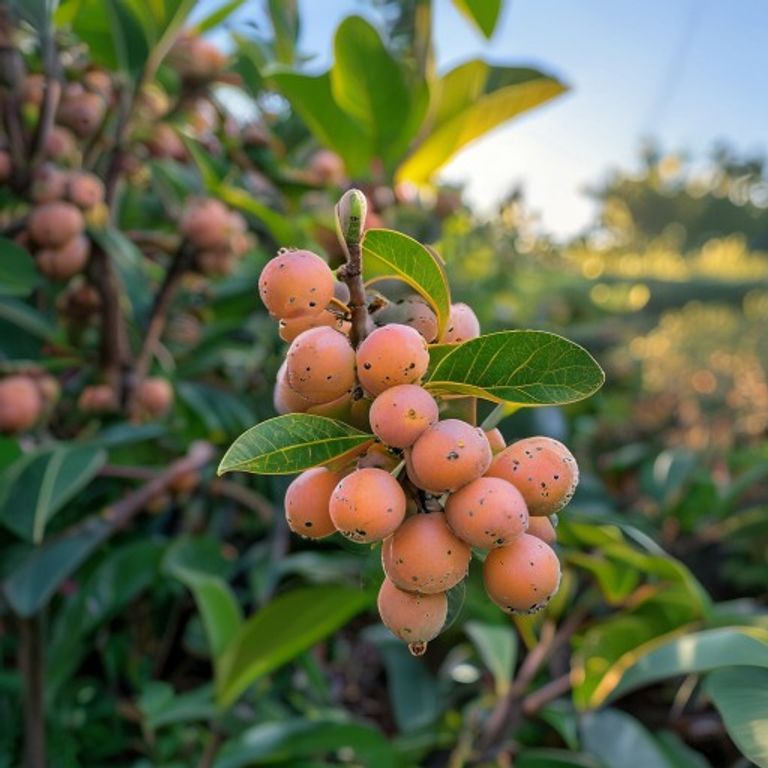
But undoubtedly, the star attraction of the Shogun Longan is its fruit. Celebrated for being exceptionally large, sweet, and incredibly juicy, it’s a true tropical delight. The fruit has a thin, brittle brownish skin that is easy to peel, revealing a translucent white aril (flesh) that surrounds a single, shiny black seed. The intense sweetness and succulent texture make it a favourite for fresh consumption, as well as for use in desserts, beverages, and even dried snacks.
Growing Requirements
To successfully cultivate a healthy and productive Shogun Longan tree, understanding its specific environmental needs is crucial. While it’s a tropical plant, providing the right conditions will ensure bountiful harvests of the sweet longan fruit.
- Light: The Shogun Longan thrives in full sun, requiring at least 6-8 hours of direct sunlight daily for optimal growth and fruit production. In India’s sunny climate, choosing an open, unshaded spot is ideal for this tropical fruit cultivation.
- Water: Consistent watering is paramount, especially during dry spells and when the tree is developing fruit. The soil should remain moist but never waterlogged, as this can lead to root rot. Mature Shogun Longan trees can tolerate short periods of drought but will perform best with regular moisture.
- Temperature: As a true tropical tree, the Shogun Longan prefers warm temperatures, ideally between 20-30°C (68-86°F). It is highly susceptible to frost damage, and temperatures below 0°C (32°F) can be detrimental. Gardeners in regions experiencing cooler winters should consider protective measures.
- Humidity: High humidity levels are generally preferred by the Shogun Longan, mimicking its native Southeast Asian environment. This is often naturally present in many parts of tropical and subtropical India.
- Soil: Well-draining, loamy soil is ideal for the Shogun Longan. It prefers a slightly acidic to neutral pH, ranging from 5.5 to 7.0. Good drainage is key to prevent waterlogging and root issues.
- Potting Mix: While primarily an outdoor tree, if starting in a pot, use a high-quality, well-draining potting mix. A mix designed for fruit trees or a general-purpose potting mix amended with perlite or coarse sand for improved drainage would be suitable. Ensure the pot has ample drainage holes.
- Fertilizer: Young Shogun Longan trees benefit from regular feeding, typically 2-3 times a year, with a balanced slow-release granular fertilizer. As the tree matures, the frequency can be slightly reduced. Once the tree is established and approaching fruiting age, a fertilizer higher in potassium can encourage better flower development and a more prolific harvest of sweet longan. Always follow the manufacturer’s recommendations for application rates.
How to Care for This Plant
Caring for a Shogun Longan tree involves a few key practices that, when followed diligently, will ensure a healthy tree and delicious fruit. Here’s a step-by-step guide:
- Site Selection: Choose a location in your garden that receives full sun for at least 6-8 hours daily and has well-draining soil. Consider its mature size (10-20 meters) and give it ample space to grow without crowding.
- Planting: When planting, dig a hole twice as wide as the root ball and just as deep. Carefully place the tree, ensuring the top of the root ball is level with the surrounding soil. Backfill with native soil, gently tamping down to remove air pockets. Water thoroughly after planting.
- Watering Schedule: Establish a consistent watering routine. For young trees, water frequently to keep the soil consistently moist. For established trees, water deeply when the top few inches of soil feel dry to the touch, especially during dry spells and fruit development. Reduce watering slightly during cooler, dormant periods.
- Fertilization: Begin fertilizing young trees with a balanced, slow-release formula as mentioned above. As the tree matures, transition to a higher potassium fertilizer to promote fruiting. Apply fertilizer around the drip line of the tree, avoiding direct contact with the trunk.
- Pruning: Pruning is best done after the harvest season. Focus on removing any dead, diseased, or damaged branches. You can also lightly prune to maintain the tree’s shape, improve air circulation within the canopy, and manage its height for easier harvesting. Avoid heavy pruning as it can reduce the subsequent year’s crop.
- Pest and Disease Monitoring: Regularly inspect your Shogun Longan tree for any signs of pests or diseases. Early detection is key to effective management.
- Winter Protection (if applicable): In regions prone to occasional frost, take measures to protect young trees. This might include covering them with frost cloths or providing temporary enclosures during cold snaps. Mature trees are more resilient but can still suffer damage in severe frosts.
- Weed Control: Keep the area around the base of the tree free of weeds, which compete for water and nutrients. A layer of organic mulch can help suppress weeds and retain soil moisture.
Common Problems and Solutions
Even with the best care, Shogun Longan trees can encounter certain issues. Here are some common problems and practical solutions:
- Yellow Leaves (Chlorosis):
- Problem: Yellowing of leaves, often with green veins, can indicate a nutrient deficiency, particularly iron, especially in alkaline soils.
- Solution: Test your soil pH. If it’s too high, amend the soil to make it more acidic with organic matter or specific acidifiers. Foliar sprays containing chelated iron can provide a quick, temporary fix. Ensure proper fertilization with a balanced feed.
- Pests:
- Problem: Mealybugs, aphids, scale insects, and fruit flies can infest Shogun Longan trees, damaging foliage and fruit.
- Solution: Regularly inspect your tree. For minor infestations, a strong jet of water or neem oil spray can be effective. Introduce beneficial insects like ladybugs. For severe cases, consult a local agricultural expert for appropriate organic or chemical pest control measures.
- Fungal Diseases (e.g., Anthracnose, Powdery Mildew):
- Problem: Anthracnose can cause spots on leaves, flowers, and fruit, while powdery mildew appears as a white, powdery coating on leaves. Both thrive in humid conditions.
- Solution: Improve air circulation within the canopy through judicious pruning. Avoid overhead watering, especially in the evenings, to keep foliage dry. Remove and destroy affected plant parts. Apply appropriate fungicides if necessary, following product instructions.
- Root Rot:
- Problem: Yellowing leaves, wilting, and stunted growth despite adequate water are signs of root rot, often caused by poorly draining soil or overwatering.
- Solution: Ensure your tree is planted in well-draining soil. Avoid overwatering; allow the topsoil to dry out slightly between waterings. For potted plants, ensure drainage holes are not blocked. Improving soil structure with organic matter can enhance drainage.
- Poor Flowering/Fruiting:
- Problem: A healthy-looking tree might not produce many flowers or fruit.
- Solution: This can be due to insufficient sunlight, lack of proper nutrients (especially potassium), or inconsistent watering. Ensure the tree receives full sun. Use a fertilizer high in potassium during the flowering and fruiting season. Maintain consistent moisture levels.
- Leaf Drop:
- Problem: Leaves falling prematurely can be a sign of stress.
- Solution: Identify the stressor: extreme temperatures (too cold), severe drought, overwatering, or nutrient deficiencies. Address the underlying cause. Provide consistent care, especially regarding water and temperature, which are critical for the Shogun Longan.
Benefits
Beyond its culinary delights, the Shogun Longan tree offers several benefits that enhance both the garden and the home environment:
- Home Decoration & Landscaping: With its impressive height, dense evergreen canopy, and seasonal creamy-white flowers, the Shogun Longan makes a majestic statement in any tropical garden or large landscape. It serves as an excellent shade tree, providing relief from the scorching Indian sun.
- Edible Landscape & Fruit Orchards: The primary benefit, of course, is its delicious fruit. Planting Shogun Longan allows you to enjoy fresh, sweet longans directly from your garden, making it an invaluable addition to edible landscapes and fruit orchards.
- Pollinator Friendly: During its late winter to early spring flowering season, the numerous creamy-white blossoms attract a variety of pollinators, including bees. This supports local biodiversity and contributes to a healthier garden ecosystem.
Frequently Asked Questions
What are the ideal growing conditions for Shogun Longan?
The Shogun Longan thrives in full sun, requiring at least 6-8 hours of direct sunlight daily. It prefers well-draining, loamy soil with a slightly acidic to neutral pH (5.5-7.0) and enjoys high humidity. Warm temperatures between 20-30°C (68-86°F) are ideal, and it must be protected from frost.
How often should I water a Shogun Longan tree?
Consistent watering is crucial, especially during dry periods and fruit development. The soil should be kept moist but never waterlogged. Water deeply when the top few inches of soil feel dry to the touch. Mature trees can tolerate brief dry spells but perform best with regular moisture.
When does Shogun Longan typically fruit?
The Shogun Longan flowers in late winter to early spring. Following successful pollination, the fruit typically develops and is ready for harvest in the summer months, usually a few months after flowering. The exact timing can vary slightly depending on local climate conditions and specific care.
Final Thoughts
Cultivating a Shogun Longan tree is a rewarding experience that brings a touch of tropical paradise and an abundance of sweet, juicy fruit to your Indian home or garden. By understanding its specific needs for sunlight, water, soil, and protection from cold, you can ensure your tree flourishes and becomes a prized possession. The satisfaction of harvesting your own exceptionally sweet longan fruit, enjoyed fresh or incorporated into delightful dishes, is truly unparalleled.
Embracing the journey of growing a Shogun Longan connects you with nature and provides a sustainable source of delicious tropical fruit. Remember, Plantrea is the online plant platform from Wynorg, helping plant lovers across India discover quality plants, practical growing advice, and trusted nursery sourcing, supporting your green aspirations every step of the way.
Interested in This Plant?
Growing a magnificent Shogun Longan tree can be a deeply satisfying endeavour, filling your garden with lush greenery and delicious fruit. If you’re considering adding this tropical gem to your collection or have more specific questions about its care in your unique Indian climate, our Plant Expert chat is here to help.
Available conveniently at the bottom-right corner of every page on Plantrea.com, our Plant Expert is like having an experienced gardener right at your fingertips. You can use this chat feature to check whether the Shogun Longan plant is currently available for purchase, ensuring you don’t miss out on this fantastic fruit tree.
Beyond availability, our Plant Expert can provide you with personalised plant recommendations tailored to your specific home or garden conditions. Feel free to ask any questions you have about Shogun Longan care and maintenance, from optimising fruit yield to tackling common challenges. And if for any reason the Shogun Longan isn’t quite right or is unavailable, the Plant Expert can also help you discover suitable alternative tropical fruit trees that would thrive in your space.
Want to buy this plant? Visit https://plantrea.com/shop-2/