Fruited Jaboticaba (Plinia cauliflora) – Grow Your Own Brazilian Grape Tree
The Fruited Jaboticaba, often affectionately known as the Brazilian Grape Tree, is a truly captivating plant that brings a touch of exotic beauty and delicious bounty to any Indian home or garden. Its unique charm lies in its striking habit of bearing fruits directly on its trunk and branches, making it a conversation starter and a visual delight. Imagine plucking sweet, grape-like fruits fresh from the bark of your very own tree!
For gardeners across India, this evergreen shrub or small tree offers not just an unusual spectacle but also a rewarding growing experience, providing fresh, edible tropical fruit right at your doorstep. Whether you’re an avid gardener or just starting, the Fruited Jaboticaba is a wonderful choice for those looking to add something special to their outdoor space. As you explore the world of unique plants like the Fruited Jaboticaba, remember that Plantrea is the online plant platform by Wynorg, a trusted Indian brand known for delivering healthy live plants safely across India, ensuring your gardening journey starts on the right root.
Botanical Overview
The Fruited Jaboticaba is scientifically known as Plinia cauliflora, and it belongs to the Myrtaceae family, which also includes guava and eucalyptus. This fascinating plant is native to the warm, humid regions of Brazil, Paraguay, Bolivia, and Argentina, where it thrives in its natural habitat.
- Botanical Name: Plinia cauliflora
- Plant Family: Myrtaceae
- Origin: Brazil, Paraguay, Bolivia, Argentina
- Plant Type: Evergreen Shrub/Small Tree
- Growth Habit: The Fruited Jaboticaba is distinctive for its cauliflorous habit, meaning its flowers and fruits emerge directly from the trunk and older, mature branches. It typically grows as a dense, rounded tree, reaching a height of 10-25 feet (3-7.5 meters) in maturity. It is a slow-growing and long-lived plant, developing a sturdy woody trunk over time.
Why People Love This Plant
The Fruited Jaboticaba holds a special place in the hearts of plant enthusiasts and fruit lovers alike, thanks to its exceptional qualities.
Appearance
Its most striking feature is undoubtedly its cauliflorous nature. The sight of countless grape-like fruits clinging directly to the trunk and branches is truly mesmerising. New foliage emerges with a lovely reddish hue, which gradually matures into dark green, lance-shaped leaves, creating a lush and attractive canopy. The smooth, mottled bark adds to its ornamental appeal.
Flowers
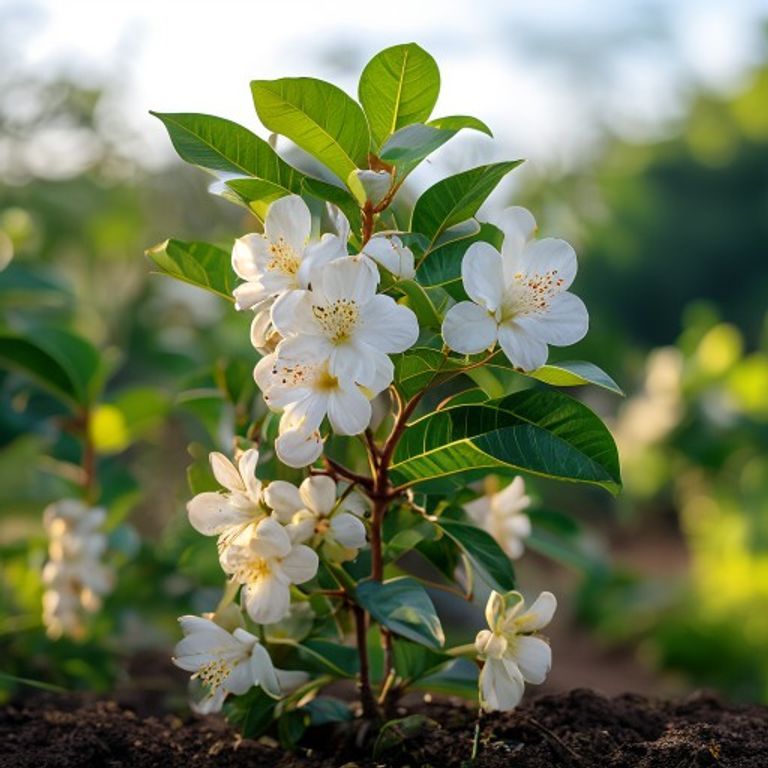
The small, white, fluffy flowers of the Fruited Jaboticaba appear in dense clusters directly on the bark, transforming the tree into a unique spectacle. These delicate blooms are often produced multiple times a year, particularly after periods of rain, hinting at the fruit production to come.
Foliage
The evergreen foliage provides year-round greenery. Young leaves unfurl with a beautiful reddish tint before maturing to a glossy, dark green. These lance-shaped leaves are relatively small, contributing to the dense and attractive canopy that the tree forms.
Fragrance
While not overtly perfumed, the delicate white flowers of the Jaboticaba emit a mild, pleasant fragrance, adding a subtle sensory experience to your garden when the tree is in bloom.
Decorative Value
Beyond its delicious fruit, the Fruited Jaboticaba is highly valued as an ornamental specimen. Its unique growth habit makes it a focal point in any garden, patio, or landscape design. It can be grown as a standalone specimen, in edible landscapes, or even in large containers, bringing an exotic touch to balconies and terraces. The contrast of the dark fruits against the smooth bark is particularly appealing.
Growing Requirements
To successfully grow Jaboticaba in Indian conditions, understanding its specific needs is crucial. This plant, also known as the Brazilian Grape Tree, thrives when provided with the right environment.
Light
The Fruited Jaboticaba prefers a location that receives full sun to partial shade. For optimal fruit production, it needs at least 6 hours of direct sunlight daily. While it can tolerate some shade, too much will reduce flowering and fruiting. In extremely hot Indian summers, some afternoon shade can be beneficial to protect younger plants from intense heat stress.
Water
This plant requires consistent moisture, especially during dry periods and when it is fruiting. The key is to keep the soil consistently moist but never waterlogged. Good drainage is paramount. Depending on the climate and soil type, this might mean watering several times a week during the hottest months. Reduce watering slightly during cooler, dormant periods. Drip irrigation can be an excellent way to maintain steady soil moisture without waste.
Temperature
The Fruited Jaboticaba is a tropical and subtropical plant, thriving in temperatures between 20-30°C (68-86°F). It is sensitive to frost, so in cooler regions of India where temperatures drop significantly in winter, it’s best to grow it in containers that can be moved indoors or to a sheltered location, or provide adequate frost protection for outdoor plants.
Humidity
Jaboticaba appreciates moderate to high humidity, mimicking its native rainforest environment. In drier Indian climates, consider misting young plants or placing them near other plants to create a microclimate of higher humidity. For container-grown plants, a pebble tray with water can help increase ambient humidity.
Soil
Well-draining soil is essential for the health of your Fruited Jaboticaba. It prefers a slightly acidic soil pH, ideally between 5.5 and 6.5. Amend heavy clay soils with organic matter like compost, peat moss, or coco coir to improve drainage and aeration. Sandy soils may need amendments to improve water retention.
Potting Mix
If you’re looking to grow Jaboticaba in a container, choose a high-quality, well-draining potting mix. A mix specifically designed for acidic-loving plants, or one containing a good proportion of perlite, bark, and peat, will work well. Ensure the pot has ample drainage holes to prevent root rot.
Fertilizer
Fertilizing is important to support the growth and fruiting of your Fruited Jaboticaba.
- Young Trees: For young trees, use a balanced, slow-release fertilizer 2-3 times a year. This helps establish a strong root system and healthy foliage.
- Mature Trees: Once established, mature Jaboticaba trees benefit from a fertilizer higher in phosphorus and potassium before fruiting flushes. This promotes abundant flowering and fruit development. Look for formulations like 0-10-10 or 2-10-10. Always follow the product’s instructions and avoid over-fertilizing, which can burn the roots.
How to Care for This Plant
Caring for your Fruited Jaboticaba, or Plinia cauliflora, is a rewarding experience. Here’s a step-by-step guide to help you grow jaboticaba successfully in your Indian garden.
- Consistent Watering: This is perhaps the most critical aspect. Jaboticaba trees are not very drought-tolerant, especially when young or fruiting. Check the soil moisture regularly. Water deeply when the top inch or two of soil feels dry to the touch. During hot, dry spells, you might need to water daily, particularly for container-grown plants. Ensure good drainage to prevent waterlogging, which can be detrimental.
- Feeding Schedule: As mentioned, young plants benefit from a balanced, slow-release fertilizer. For mature, fruiting trees, switch to a high-phosphorus, high-potassium fertilizer a few weeks before an expected flowering flush. This typically occurs after a good rain or during specific seasons. Spread the fertilizer evenly around the drip line and water it in thoroughly.
- Pruning for Health and Shape: The Fruited Jaboticaba naturally forms a dense, attractive canopy, so heavy pruning is rarely needed. Focus on removing any dead, diseased, or damaged branches. You can also lightly prune to maintain a desirable shape, especially if growing it as a shrub or for container gardening. Avoid excessive pruning, as fruits develop on older wood.
- Protect from Frost: If you live in a region prone to cold snaps or occasional frost, protecting your Jaboticaba is vital. For container plants, move them to a sheltered location or indoors. For in-ground trees, cover them with frost cloths or burlap when temperatures are expected to drop. Consider planting in a spot that offers some natural protection, like near a south-facing wall.
- Mulching: Apply a 2-3 inch layer of organic mulch around the base of the tree, keeping it a few inches away from the trunk. This helps retain soil moisture, suppress weeds, and slowly adds organic matter to the soil, contributing to the slightly acidic conditions the plant prefers.
- Pest and Disease Monitoring: Regularly inspect your plant for any signs of pests or diseases. Early detection makes treatment much easier. Good cultural practices, like proper watering and air circulation, go a long way in preventing issues.
- Container Care (if applicable): If growing your Fruited Jaboticaba in a pot, ensure it’s a large one to accommodate its root system and allow for growth. Repotting every 2-3 years into a slightly larger pot with fresh potting mix can keep it healthy.
Common Problems and Solutions
While the Fruited Jaboticaba is generally resilient, gardeners might encounter a few common issues. Here’s how to address them:
- Yellow Leaves (Chlorosis):
- Problem: Leaves turning yellow, especially between the veins, often indicates a nutrient deficiency, most commonly iron or zinc. This usually happens in alkaline soils where these nutrients are less available.
- Solution: Test your soil pH. If it’s too high (alkaline), amend the soil with acidic organic matter like peat moss or elemental sulfur. Apply chelated iron or zinc fertilizers, or foliar sprays designed to correct micronutrient deficiencies. Ensuring the soil pH is within the ideal range of 5.5-6.5 is key.
- Pests: Aphids, Scale, Mealybugs:
- Problem: These sap-sucking insects can cluster on new growth or undersides of leaves, causing distorted growth, yellowing, or a sticky residue (honeydew).
- Solution: For mild infestations, a strong spray of water can dislodge them. For more severe cases, apply horticultural oil or insecticidal soap, ensuring thorough coverage of the affected areas. Repeat applications may be necessary. Encourage beneficial insects like ladybugs, which are natural predators.
- Fungal Diseases:
- Problem: While generally resistant, poor air circulation or excessive humidity can sometimes lead to fungal issues like powdery mildew or leaf spots.
- Solution: Ensure good air circulation around the plant through proper spacing and minimal pruning. Remove affected leaves. In persistent cases, apply a natural fungicide, following product instructions.
- Root Rot:
- Problem: This is a serious issue caused by overwatering or poorly draining soil, leading to soggy conditions that suffocate roots and promote fungal growth. Symptoms include wilting, yellowing leaves, and stunted growth.
- Solution: Prevent by ensuring excellent soil drainage and only watering when the top soil layer is dry. If root rot is suspected, gently lift the plant, prune away any soft, black, or mushy roots, and replant in fresh, well-draining soil. Improve drainage in the planting site or pot.
- Poor Flowering/Fruiting:
- Problem: A lack of flowers or fruit can be due to insufficient sunlight, inadequate watering, nutrient deficiencies, or a young plant that hasn’t reached maturity.
- Solution: Ensure the plant receives at least 6 hours of direct sunlight. Maintain consistent soil moisture. For mature plants, fertilize with a high-phosphorus, high-potassium formula before expected flowering flushes. Remember that plants grown from seed can take 8-15 years to fruit, while grafted ones fruit faster.
- Slow Growth/Leaf Drop:
- Problem: These can be general indicators of stress due to various factors: extreme temperatures, inconsistent watering, poor soil, or nutrient deficiencies.
- Solution: Review all cultural practices. Ensure optimal light, water, temperature, and soil conditions. Address any identified deficiencies or stressors. Protect from harsh winds or extreme heat.
Benefits
The Fruited Jaboticaba is much more than just a novelty plant; it offers a plethora of benefits for both the gardener and the environment.
- Home Decoration: Its unique cauliflorous growth habit, with fruits adorning the trunk, makes it an extraordinary ornamental plant. It serves as a stunning specimen tree, adding a touch of the exotic and a definite talking point to any home garden or patio.
- Balcony Gardening: For urban dwellers in India with limited space, the Fruited Jaboticaba can be successfully grown in large containers. This allows you to enjoy its beauty and harvest its fruits even on a balcony or terrace, transforming a small space into a productive mini-orchard.
- Landscaping: Jaboticaba is an excellent choice for edible landscaping. It can be integrated into garden designs, providing both aesthetic appeal and a delicious harvest. Its dense canopy also offers welcome shade in hot climates.
- Pollinator Friendly: The flowers of the Fruited Jaboticaba attract various pollinators, including bees, which are essential for fruit set. The ripe fruits, in turn, attract birds and other small wildlife, contributing to the biodiversity and ecological balance of your garden.
- Antioxidant Properties: The delicious, grape-like fruits are not just tasty but also packed with antioxidants. These natural compounds are known for their health benefits, making the Fruited Jaboticaba a valuable addition to a health-conscious diet.
Frequently Asked Questions
How long does it take for a Jaboticaba tree to bear fruit?
The time it takes for a Fruited Jaboticaba tree to bear fruit can vary significantly. Young Jaboticaba trees grown from seed can take anywhere from 8 to 15 years to start producing fruit. However, if you acquire a grafted or air-layered plant, you can expect much faster results, with these trees potentially fruiting in just 3 to 5 years after planting.
What kind of climate does Jaboticaba prefer?
The Fruited Jaboticaba thrives best in warm, humid, tropical or subtropical climates. It prefers consistent temperatures between 20-30°C (68-86°F) and is quite sensitive to frost. In regions of India that experience cold winters, it will require protection or be grown in containers to be moved indoors during chilly months.
Can Jaboticaba be grown in a container?
Yes, the Fruited Jaboticaba adapts very well to container growing, making it an excellent choice for patios, balconies, or smaller gardens. To succeed, ensure you use a large enough pot to accommodate its root system, provide a well-draining potting mix, and maintain consistent watering and feeding schedules. Regular repotting into a slightly larger container every few years will also help its growth.
Final Thoughts
The Fruited Jaboticaba, or Brazilian Grape Tree, is truly a remarkable plant that offers a unique combination of ornamental beauty and delicious, healthy fruit. Its ability to produce grape-like berries directly on its trunk is a source of constant fascination and a testament to the diversity of the plant kingdom. By providing the right balance of light, water, and care, you can enjoy the rewards of this extraordinary plant in your own Indian garden for many years to come.
Embracing the journey of growing a Fruited Jaboticaba is a delightful experience, full of discovery and satisfaction. As you delve deeper into the world of gardening and explore diverse plant species, remember that Plantrea is the online plant platform from Wynorg, helping plant lovers across India discover quality plants, practical growing advice, and trusted nursery sourcing. We’re here to support your green thumb every step of the way.
Interested in This Plant?
Curious about adding a Fruited Jaboticaba to your collection, or perhaps wondering if it’s the perfect fit for your specific garden conditions? Our Plant Expert chat is here to help! Available conveniently at the bottom-right corner of every page, our experienced gardening assistant is ready to provide you with personalised guidance.
You can use the Plant Expert chat to quickly check if the Fruited Jaboticaba is currently available for delivery in your area. Our experts can also offer personalised plant recommendations tailored to your home or garden’s unique environment, ensuring you choose plants that will truly thrive with you. Feel free to ask any specific questions you have about the care and maintenance of your Fruited Jaboticaba, from watering schedules to pest prevention.
And if, for any reason, the Fruited Jaboticaba isn’t quite right or is currently out of stock, our Plant Expert can help you discover suitable alternative plants that offer similar benefits or growing requirements. It’s like having a seasoned gardener right by your side, ready to share knowledge and help you cultivate your green dreams.
Want to buy this plant? Visit https://plantrea.com/shop-2/