Gulmohar Tree – Brilliant Red-Orange Summer Flowers | Wynorg Nursery
The Gulmohar tree, also widely known as the Royal Poinciana, is a sight that captures hearts across India. When summer arrives, this magnificent tree explodes into a riot of brilliant red-orange blossoms, transforming landscapes into breathtaking canvases of fiery hues. It’s a beloved feature in Indian cities, parks, and large gardens, cherished for its spectacular canopy and the cool shade it offers during the intense summer months. Its dramatic beauty makes it a popular choice for anyone looking to add a touch of grandeur and vibrant colour to their outdoor spaces.
For those passionate about bringing such stunning natural beauty into their surroundings, understanding the needs of plants like the Gulmohar is key. Plantrea is the online plant platform by Wynorg, a trusted Indian brand known for delivering healthy live plants safely across India. We believe that with the right knowledge, every gardener, from novice to expert, can cultivate thriving plants and enjoy the unparalleled joy they bring.
Botanical Overview
The Gulmohar tree is botanically known as Delonix regia. It belongs to the Fabaceae family, which is the pea family, though its grand flowers often lead people to think otherwise. Native to Madagascar, this deciduous tree has found a second home in tropical and subtropical regions worldwide, including the diverse climates of India. It’s a fast-growing, spreading tree, celebrated for its broad, umbrella-like canopy. With a potential height of 30-40 feet and an equally impressive spread, the Gulmohar is truly a majestic specimen that demands respect for its size and beauty.
Why People Love This Plant
There are countless reasons why the Gulmohar, or Royal Poinciana, holds a special place in the hearts of plant enthusiasts:
Appearance
The Gulmohar’s charm lies predominantly in its stunning visual appeal. Its fern-like, delicate foliage provides a beautiful green backdrop for most of the year, but it’s during the flowering season that this tree truly becomes a showstopper.
Flowers
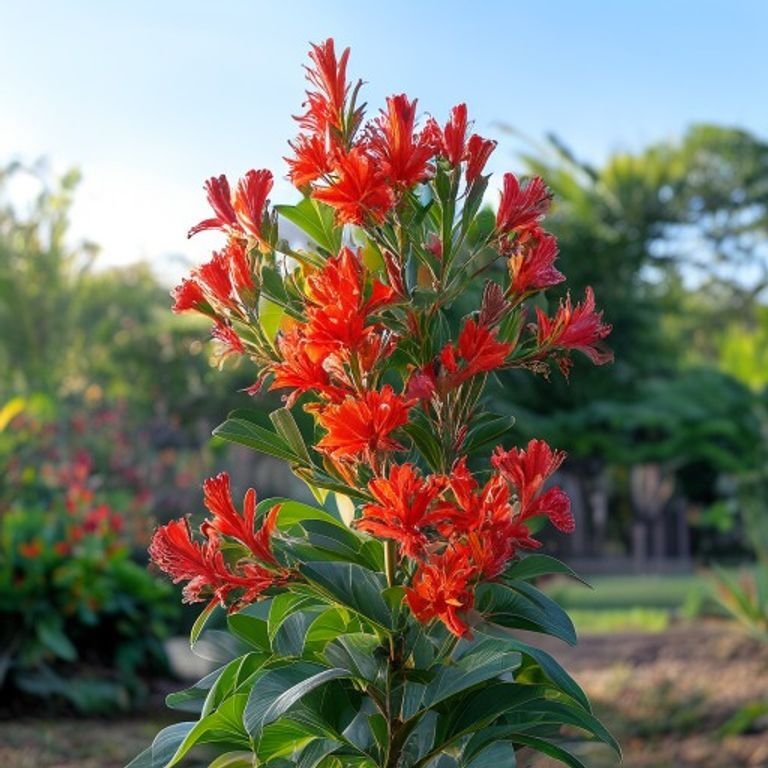
The flowers are the undisputed stars of the Gulmohar. They are large, flamboyant, and typically come in shades of brilliant red to fiery orange. Each flower has five petals, four of which are spoon-shaped and vibrant, while the fifth, known as the standard petal, is slightly larger, often mottled with white or yellow, adding a unique touch. These flowers appear in large clusters, practically covering the entire tree, making it look as if the tree itself is aflame. The peak blooming season is usually from April to June, coinciding with the harsh Indian summer, providing a much-needed splash of colour.
Foliage
While the flowers steal the show, the Gulmohar’s foliage is also noteworthy. Its leaves are bipinnate, meaning they are finely divided into numerous small leaflets, giving them a delicate, fern-like appearance. This creates a soft, dappled shade underneath the tree, making it a perfect spot to relax during hot days.
Fragrance
Interestingly, despite their striking beauty, Gulmohar flowers are not particularly fragrant. Their appeal is purely visual, relying on their vibrant colours and grand display to captivate admirers.
Decorative Value
The Gulmohar tree offers immense decorative value for landscaping and urban planning. Its wide, spreading canopy provides excellent shade, making it ideal for parks, avenues, large garden lawns, and public spaces where shade is highly valued. The tree’s dramatic seasonal transformation also makes it a focal point, adding significant aesthetic value wherever it is planted.
Growing Requirements
Cultivating a healthy Gulmohar tree in India is relatively straightforward, provided its basic needs are met. Here’s what you need to know:
Light
The Gulmohar tree thrives in full sun. It absolutely needs at least 6-8 hours of direct sunlight every day to produce its spectacular blooms. In India’s climate, this usually isn’t an issue, but ensure it’s planted in an open spot away from competing canopies of other large trees or buildings that might cast too much shade.
Water
Once established, the Gulmohar is remarkably drought tolerant, making it well-suited for many parts of India. Young trees, however, require regular watering to help them establish a strong root system. Water deeply once or twice a week for the first year or two, especially during dry spells. Mature trees will typically only need supplemental watering during extended periods of severe drought.
Temperature
Being a tropical tree, Gulmohar loves warmth. It flourishes in temperatures ranging from 20°C to 35°C, which aligns perfectly with Indian climate conditions for most of the year. It can tolerate short periods of slightly cooler temperatures but is not frost-hardy, so it’s best suited for regions that don’t experience severe winters.
Humidity
The Gulmohar is adaptable to various humidity levels typical of tropical and subtropical regions. It doesn’t have specific high humidity requirements and performs well in both humid coastal areas and drier inland regions of India.
Soil
Well-drained soil is paramount for the Gulmohar. It can adapt to a range of soil types, including sandy, loamy, or clayey soils, as long as they do not retain excessive moisture. A slightly acidic to neutral pH (6.0 to 7.0) is ideal.
Potting Mix
While Gulmohar is primarily an outdoor tree planted directly in the ground, if you are starting it in a pot (for a very short initial period or as a very young specimen), use a good quality, well-draining potting mix. A mix containing garden soil, sand, and compost in equal parts would be suitable. However, remember this tree quickly outgrows pots and needs to be transplanted into the ground to reach its full potential.
Fertilizer
Young Gulmohar trees benefit from a balanced granular fertilizer once a year in spring to encourage robust growth. For established trees, heavy fertilization is usually not necessary. If your soil is poor, a light application of compost or a balanced slow-release fertilizer in late winter can be beneficial. Avoid high-nitrogen fertilizers, as they can promote leafy growth at the expense of flowers.
How to Care for This Plant
Caring for a Gulmohar tree is generally quite rewarding and not overly demanding:
- Planting: Choose a spacious location with full sun and good drainage. Dig a hole twice as wide as the root ball and just as deep. Carefully place the tree, ensuring the top of the root ball is level with the ground. Backfill with soil, gently firming it around the roots, and water thoroughly.
- Watering Schedule: For the first year or two, water deeply and regularly, especially during dry periods. Reduce watering as the tree matures and establishes itself. Mature Gulmohar trees are largely self-sufficient regarding water, relying on rainfall except during prolonged droughts.
- Pruning for Shape and Health: Pruning is crucial, especially when the tree is young. Aim to establish a strong central leader and well-spaced scaffold branches. Remove any crossing, weak, or dead branches. Pruning can also help manage its spreading habit and prevent it from becoming too dense. The best time for light pruning is after the flowering season. For heavy structural pruning, consult an arborist.
- Pest and Disease Monitoring: Regularly inspect your tree for signs of pests or diseases. Early detection makes treatment easier. While generally robust, like any plant, it can be susceptible to certain issues.
- Seasonal Care: In preparation for the flowering season, ensure the tree receives adequate sunlight and, if needed, some light fertilization in late winter. During the peak summer bloom, appreciate its beauty! After flowering, the tree will often shed its leaves briefly before new growth emerges.
Common Problems and Solutions
While the Gulmohar is a hardy tree, gardeners might encounter a few issues:
- Root Rot: This is primarily caused by excessively wet or poorly draining soil.
- Solution: Ensure your planting site has excellent drainage. If the tree is still young and showing signs of root rot (yellowing leaves, stunted growth), try to improve drainage around the root zone or consider transplanting to a better site if feasible. For established trees, avoid overwatering.
- Can Become Very Large: Gulmohar is a fast-growing, spreading tree. Its size can be a problem if planted in a small garden or too close to structures.
- Solution: Plan its placement carefully. Plant it where it has ample space to grow to its full 30-40 feet height and wide canopy. Regular structural pruning when young can help manage its shape and size to some extent, but it’s fundamentally a large tree.
- Messy Seed Pods: After flowering, the Gulmohar produces long, dark brown, woody seed pods that can be quite large (up to 60 cm). These can be messy when they drop.
- Solution: This is a natural part of the tree’s life cycle. If the mess is a concern, you might need to rake up the fallen pods regularly, especially if planted over pathways or patios.
- Yellow Leaves: Yellowing leaves can indicate various issues, including overwatering, nutrient deficiency, or sometimes natural leaf drop before flowering or during a dry spell.
- Solution: Check soil moisture. If it’s too wet, reduce watering. If dry, water deeply. A soil test can identify nutrient deficiencies, which can then be corrected with appropriate fertilizer. Gulmohar is deciduous, so some leaf drop is normal, especially before its grand bloom.
- Pests: While generally resistant, young trees or stressed plants can occasionally be affected by common pests like aphids or mealybugs.
- Solution: For mild infestations, a strong spray of water can dislodge pests. Neem oil spray can be effective for more persistent issues. Ensure good air circulation around the tree.
- Slow Growth: If your Gulmohar isn’t growing as expected, it might be due to insufficient sunlight, poor soil, or inadequate watering (especially for young trees).
- Solution: Re-evaluate its planting location – ensure it gets full sun. Improve soil quality if needed with compost. Ensure consistent, deep watering for young trees.
Benefits
The Gulmohar tree offers a multitude of benefits that extend beyond its undeniable beauty:
- Spectacular Summer Bloom: Its most striking benefit is undoubtedly the explosion of red-orange flowers that blanket the tree during peak summer, providing unparalleled visual drama and a joyful welcome to the season.
- Wide Shade Canopy: The broad, spreading crown of the Gulmohar provides excellent, dense shade, making it an ideal choice for large gardens, parks, and avenues where relief from the sun is much appreciated. It creates natural cool spots perfect for relaxation.
- Drought Tolerant: Once established, this tree is highly resilient to dry conditions, requiring minimal water. This makes it a sustainable choice for landscaping in regions with water scarcity or those experiencing prolonged dry spells, a common concern in many parts of India.
- Home Decoration & Landscaping: For those with large outdoor spaces, a Gulmohar tree serves as a magnificent specimen plant, enhancing the aesthetic appeal and creating a focal point. Its vibrant colours can transform an ordinary garden into an exotic paradise.
- Pollinator Friendly: While not its primary feature, the vibrant flowers can attract some pollinators, contributing to local biodiversity.
Frequently Asked Questions
When does it bloom?
The Gulmohar tree typically blooms in peak summer, usually from April to June in most parts of India, creating a spectacular display of red-orange flowers.
How tall does it grow?
Gulmohar trees can grow quite tall, reaching heights of 30-40 feet, and often spread just as wide. They require ample space to develop their characteristic umbrella-like canopy.
Is it drought tolerant?
Yes, once the Gulmohar tree is established, it is remarkably drought tolerant. Young trees need regular watering to establish their root system, but mature trees can withstand dry periods well.
Final Thoughts
The Gulmohar tree is more than just a plant; it’s a living spectacle, a symbol of summer’s vibrant energy in India. Its brilliant red-orange blossoms bring joy and a sense of grandeur to any landscape, while its generous canopy offers much-needed shade. With its moderate care requirements and stunning visual impact, the Royal Poinciana is a magnificent addition for anyone with the space to accommodate its majestic growth.
Embracing the beauty of plants like the Gulmohar enriches our lives and our surroundings. Plantrea is the online plant platform from Wynorg, helping plant lovers across India discover quality plants, practical growing advice, and trusted nursery sourcing. We are committed to fostering a love for gardening and ensuring every plant journey is successful and rewarding.
Interested in This Plant?
Are you captivated by the idea of a vibrant Gulmohar tree gracing your garden, or do you have further questions about its care? We understand that every garden is unique, and getting the right advice can make all the difference.
Our Plant Expert chat, conveniently located at the bottom-right corner of every page, is here to assist you. You can use it to check the current availability of the Gulmohar tree, get personalised plant recommendations tailored to your specific garden conditions, or simply ask any questions you might have about its care and maintenance. Our experts are ready to provide practical, friendly advice to help your Gulmohar thrive.
Perhaps you’re looking for a similar large flowering tree, or want to explore other options for your space? Our Plant Expert can also guide you to suitable alternatives if the Gulmohar isn’t quite right or if you’re exploring other magnificent trees for your landscape. Think of it as having a seasoned gardener right at your fingertips!
Want to buy this plant? Visit https://plantrea.com/shop-2/