Coral Vine – Masses of Pink Heart-Shaped Flowers | Wynorg Nursery
The Coral Vine, with its spectacular cascade of delicate pink blooms, is a true showstopper in many Indian gardens. This resilient and fast-growing climber is celebrated for its ability to transform fences, arbours, and walls into vibrant tapestries of colour, bringing a touch of tropical charm to any landscape. Its heart-shaped flowers, borne in profusion, are not just a treat for the eyes but also a magnet for local pollinators, making it a living, breathing addition that enhances the biodiversity of your outdoor space. It’s a plant that thrives on neglect, perfectly suited for busy gardeners or those looking for maximum impact with minimal effort.
For gardening enthusiasts across the subcontinent, finding the right plants and reliable information is key to a thriving garden. Plantrea is the online plant platform by Wynorg, a trusted Indian brand known for delivering healthy live plants safely across India. We believe in empowering gardeners with knowledge and quality plants, and the Coral Vine is certainly one that deserves a spot in many Indian homes and gardens due to its undeniable beauty and incredible hardiness.
Botanical Overview
The enchanting Coral Vine goes by the botanical name Antigonon leptopus. It belongs to the Polygonaceae family, which might surprise some, as this family also includes plants like buckwheat and rhubarb. Native to Mexico, this striking plant is a perennial flowering vine, meaning it lives for more than two years and produces blooms season after season. Its growth habit is that of a vigorous climber, capable of reaching impressive heights, often scaling 20-30 feet or more when given adequate support and space. Its tendrils gracefully reach out, latching onto structures and rapidly covering them with lush foliage and a breathtaking display of pink heart-shaped flowers, creating a truly romantic and picturesque scene.
Why People Love This Plant
There are countless reasons why the Coral Vine, often called the Queen’s Wreath, has captivated the hearts of gardeners in India:
Appearance
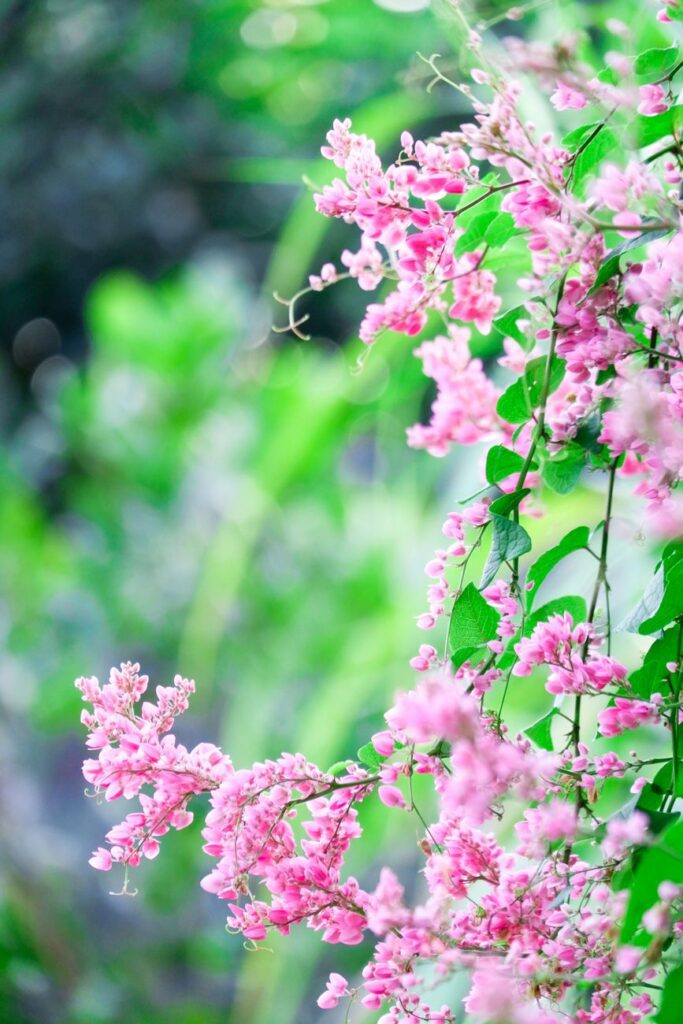
The sheer abundance of its blooms is arguably its most appealing feature. From late spring right through to fall, sometimes even into early winter in warmer regions, the plant is absolutely smothered in flowers. These aren’t just any flowers; they are delicate, heart-shaped, and come in various shades of pink, ranging from soft pastel to vibrant fuchsia.
Flowers
The Coral Vine’s flowers emerge in long, cascading clusters, creating a waterfall effect that is truly mesmerising. Each cluster can be quite long, densely packed with numerous small blooms. While they don’t possess a strong fragrance, their visual impact more than compensates. These blossoms are also a delightful attraction for bees and butterflies, turning your garden into a buzzing, fluttering haven of activity.
Foliage
Complementing the vibrant flowers are the plant’s lovely bright green, heart-shaped leaves. These leaves provide a lush backdrop, allowing the pink blooms to truly pop. Even when not in full bloom, the dense foliage offers excellent screening and shade, making it a functional as well as beautiful addition to your garden.
Decorative Value
The Coral Vine is a dream come true for garden decorators. Its natural climbing habit makes it ideal for covering pergolas, arbours, fences, and walls, creating living privacy screens or breathtaking entryways. It’s also frequently used for roadside beautification and in dry gardens where its drought tolerance is a major advantage. Imagine a sunny corner of your balcony or garden transformed by a wall of cascading pink blooms – the Coral Vine makes this a reality.
Growing Requirements
One of the Coral Vine’s most endearing qualities is its undemanding nature. It truly thrives on neglect, making it an excellent choice for beginner gardeners or those who prefer a low-maintenance landscape. Here’s what this pink flowering vine needs to flourish:
Light
This plant is a sun-worshipper. To achieve its best flowering display, the Coral Vine absolutely needs full sun. Aim for at least 6-8 hours of direct sunlight per day. While it can tolerate some partial shade, too little sun will result in fewer flowers and sparser growth.
Water
Once established, the Coral Vine is remarkably drought-tolerant. In fact, overwatering is one of the few ways to truly harm this plant. During its establishment phase (the first few months after planting), water regularly to help it settle in. After that, especially in India’s hot and dry conditions, very low water is sufficient. Allow the soil to dry out completely between waterings. In monsoon seasons, little to no supplemental watering will be needed.
Temperature
As a tropical and subtropical native, the Coral Vine loves warm temperatures. It thrives in the heat and humidity common across much of India. It can tolerate short periods of cooler weather but is generally not frost-hardy. In regions with very cold winters, it might die back to the ground but will often re-emerge from its roots in spring.
Humidity
The Coral Vine is not particularly fussy about humidity levels. It performs well in both humid coastal areas and drier inland regions of India.
Soil
This resilient climber is incredibly adaptable when it comes to soil. It thrives even in poor soil conditions, blooming profusely where many other plants might struggle. The most crucial factor is excellent drainage. It dislikes heavy, waterlogged soils. A sandy, loamy soil is ideal, but it will tolerate most soil types as long as they drain well.
Potting Mix
If growing your Coral Vine in a pot, choose a large, sturdy container to accommodate its vigorous growth. Use a well-draining potting mix. Avoid overly rich mixes, as this can encourage leafy growth at the expense of flowers. A standard garden soil mix lightened with some sand or perlite works well.
Fertilizer
Surprisingly, the Coral Vine does not need fertilizer. In fact, it often blooms better in poor soil conditions. Too much fertilizer, especially those high in nitrogen, can lead to excessive leafy growth and fewer flowers. If your soil is extremely impoverished, a very light application of a balanced, low-phosphorus fertilizer in early spring might be considered, but it’s often unnecessary.
How to Care for This Plant
Caring for the Coral Vine is delightfully simple, earning it its reputation as an easy-care plant. Here’s how to keep your Antigonon leptopus happy and blooming:
- Watering Wisely: After the first few months, reduce watering significantly. Check the soil moisture by sticking your finger a few inches deep; water only when it feels dry. During prolonged dry spells, a deep watering once a week or every two weeks might be enough.
- Pruning for Control and Blooms: This plant is a vigorous grower, so regular pruning is essential, especially in warm climates where it can become quite expansive. The best time for a hard prune is in late winter or early spring, just before new growth begins. You can cut back old, woody stems by a third or even more to maintain its size, shape, and encourage a flush of new flowering branches. Throughout the growing season, you can also lightly prune to shape the plant and remove any unruly or dead growth.
- Providing Support: As a climbing vine, the Coral Vine needs a strong support structure. Install a sturdy trellis, arbor, fence, or pergola before planting. Guide the young stems to the support initially; the plant will then use its tendrils to climb on its own.
- Container Growing: If growing in a pot, ensure it’s a large one with good drainage holes. Monitor soil moisture more frequently than for ground-planted vines, as pots dry out faster. Regular pruning will be crucial to keep its size manageable in a container.
- Pest and Disease Watch: The Coral Vine is remarkably tough and generally resistant to most pests and diseases. Keep an eye out for any unusual leaf discolouration or signs of insects, but problems are rare.
Common Problems and Solutions
While generally trouble-free, even the resilient Coral Vine can face a few issues:
- Can become invasive in warm climates: In tropical and subtropical areas, the Coral Vine’s vigorous growth can be a concern. It can spread by self-seeding and through root runners, potentially outcompeting other plants.
- Solution: Regular, hard pruning in late winter is crucial to keep its growth in check. Remove any root runners promptly as they appear to prevent unwanted spread. Consider planting it in an area where its spread can be naturally contained, or in a large container if you have limited space.
- Poor Flowering: If your Coral Vine isn’t producing the expected masses of pink flowers, a few factors could be at play.
- Solution: The most common reasons are too much shade or excessive fertilizer. Ensure your plant is receiving full sun (6-8 hours daily). If you’ve been fertilizing, stop, especially with high-nitrogen products. Remember, this plant blooms best in poor soil. Overwatering can also discourage blooms, so let the soil dry out between waterings.
- Yellow Leaves: Yellowing leaves can indicate several issues.
- Solution: The most common cause is overwatering or poor drainage, leading to root rot. Ensure the soil is well-draining and you’re not watering too frequently. If in a pot, check drainage holes. Nutrient deficiencies can also cause yellowing; however, given the Coral Vine’s preference for poor soil, this is less likely unless the soil is completely depleted.
Benefits
Beyond its sheer beauty, the Coral Vine offers several practical advantages for Indian gardeners:
- Home Decoration & Landscaping: It’s an outstanding choice for adding vertical interest and colour. Use it to drape over pergolas, archways, fences, or to soften the look of a plain wall. Its ability to cover large areas quickly makes it perfect for enhancing garden aesthetics or even for roadside beautification.
- Balcony Gardening: While it’s a vigorous climber, with a large pot and regular pruning, you can enjoy the stunning display of this pink flowering vine on your balcony, bringing a lush, romantic feel to urban spaces.
- Drought Tolerant: This is a major benefit, especially in regions of India that experience water scarcity or long dry spells. Once established, it requires very little water, making it an eco-friendly and low-maintenance option.
- Attracts Pollinators: The profusion of flowers is a magnet for bees and butterflies, contributing positively to local ecosystems and supporting biodiversity in your garden.
- Thrives on Neglect: For gardeners who want a beautiful garden without constant fuss, the Coral Vine is ideal. It tolerates poor soil, heat, and doesn’t demand much attention, making it a truly easy-care plant.
Frequently Asked Questions
Is the Coral Vine invasive?
In very warm, tropical areas with no frost, the Coral Vine can indeed become quite vigorous and spread aggressively through self-seeding and root runners. However, its growth can be controlled effectively through regular, hard pruning, especially in late winter. You can also monitor for and remove any root runners as they emerge to keep it contained within your desired area.
Does it need fertilizer?
No, the Coral Vine generally does not need fertilizer. In fact, it’s known to bloom more profusely in poor soil conditions. Excessive fertilization, particularly with high-nitrogen products, can lead to lush leafy growth at the expense of flowers. Save your fertilizers for other plants; the Coral Vine prefers to be left alone!
Can I grow Coral Vine in Rajasthan?
Absolutely! The Coral Vine is an excellent choice for regions like Rajasthan. Its extreme drought tolerance and ability to thrive in full sun and high temperatures make it perfectly suited for the arid and semi-arid conditions found there. Just ensure it has a good support structure to climb, and it will reward you with beautiful blooms.
Final Thoughts
The Coral Vine (Antigonon leptopus) is more than just a plant; it’s a testament to nature’s resilience and beauty. Its stunning display of heart-shaped pink flowers, coupled with its remarkable hardiness and low maintenance requirements, makes it a cherished addition to any Indian garden. Whether you’re looking to create a vibrant focal point, cover an unsightly fence, or simply enjoy a profusion of blooms with minimal effort, this pink flowering vine is an outstanding choice that rarely disappoints. It’s a plant that promises to bring joy and a splash of vibrant colour year after year, attracting beautiful pollinators and proving that even the most spectacular gardens can be easy to maintain.
As you embark on your gardening journey, remember that Plantrea is the online plant platform from Wynorg, helping plant lovers across India discover quality plants, practical growing advice, and trusted nursery sourcing. We are committed to providing you with the best resources to cultivate a thriving and beautiful green space.
Interested in This Plant?
If the enchanting Coral Vine has captured your imagination, and you’re wondering how to incorporate this stunning pink flowering vine into your own garden or balcony, we’re here to help! Gardening can sometimes bring up specific questions, and our Plant Expert chat is designed to provide you with personalised, friendly advice.
Our Plant Expert is an experienced gardening assistant available right at the bottom-right corner of every page. You can use this chat to quickly check if the Coral Vine is currently available in stock. Beyond availability, our expert can offer personalised plant recommendations tailored to your specific home or garden conditions, ensuring you choose the perfect plants for your space.
Don’t hesitate to ask any questions you might have about Coral Vine care and maintenance, from pruning tips to dealing with any specific challenges you might encounter. If, by any chance, the Coral Vine isn’t available or suitable for your unique needs, our Plant Expert can also help you discover similar plants that offer comparable beauty and benefits. Think of them as your personal guide to a thriving garden!
Image by: Dinh Nghia Lee
https://www.pexels.com/@dinh-nghia-lee-78568944