Durian Musang King: A Comprehensive Guide to Growing the King of Fruits in India
The Durian, often hailed as the “King of Fruits,” commands a unique reverence across Southeast Asia, and its popularity is steadily growing in Indian homes and gardens. Renowned for its distinctive aroma, creamy texture, and rich flavour, the Musang King cultivar is particularly sought after for its superior quality. While challenging to grow, the reward of harvesting this exotic fruit from your own backyard makes the effort truly worthwhile for enthusiastic gardeners.
Whether you’re a seasoned horticulturist or a budding plant parent, understanding the specific needs of this tropical giant is key to its success. Plantrea is the online plant platform by Wynorg, a trusted Indian brand known for delivering healthy live plants safely across India, and we are here to guide you through every step of cultivating your very own Durian Musang King bud plant.
Botanical Overview
The Durian Musang King belongs to a fascinating botanical lineage:
- Botanical Name: Durio zibethinus L. (Musang King is a highly prized cultivar)
- Plant Family: Malvaceae (formerly classified under Bombacaceae)
- Origin: Southeast Asia, particularly Malaysia and Indonesia, where it is native to rainforests.
- Plant Type: Large, evergreen tropical fruit tree.
- Growth Habit: The Durian Musang King tree grows upright with a sturdy trunk and a dense canopy. In maturity, it can reach impressive heights, often exceeding 30-40 metres in its natural habitat, though cultivated trees are typically managed to a more accessible height. As a bud plant, it ensures genetic fidelity to the parent tree, guaranteeing the specific Musang King characteristics.
Why People Love This Plant
The appeal of Durian Musang King goes far beyond its botanical classification:
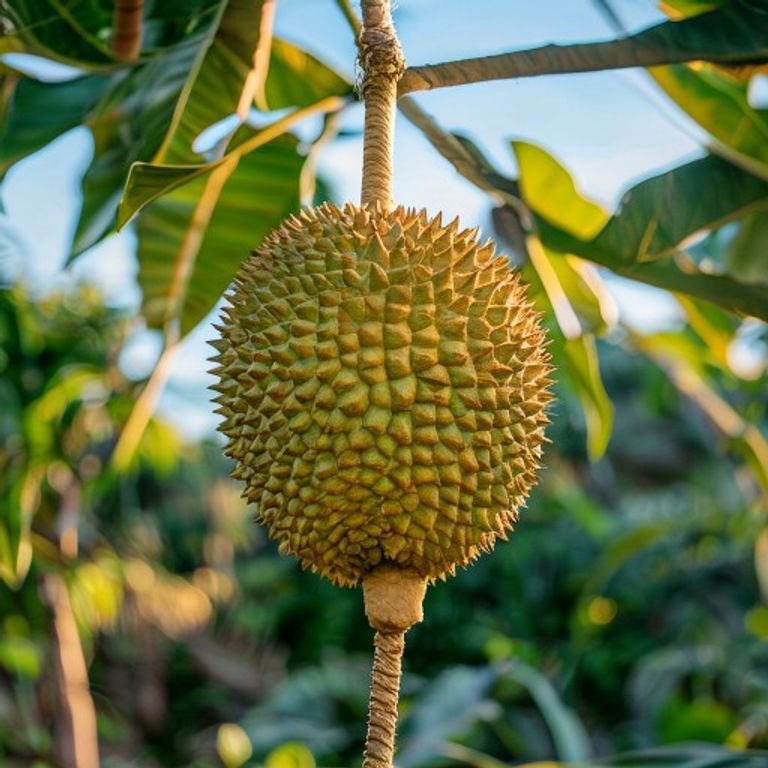
- Appearance: A mature Durian tree is a majestic sight, with its tall stature and broad canopy providing ample shade. The leaves are glossy green on the upper surface and coppery or golden underneath, creating a beautiful contrast. However, the true showstopper is the fruit itself – large, oval to round, covered in formidable green-brown spines, instantly recognizable.
- Flowers: Durian flowers are pale yellowish-white, large, and hang in clusters from the branches. They typically open in the evening and are pollinated by bats and moths, emitting a strong, sometimes sour, fragrance that attracts these nocturnal visitors. While not typically grown for ornamental flowers, their presence signals the promise of the treasured fruit.
- Foliage: The distinct foliage of the Durian Musang King adds to its tropical allure. The leaves are oblong to lanceolate, about 10-20 cm long, and have a unique silvery-bronze underside that shimmers in the breeze. This dense foliage provides excellent shade in warmer climates.
- Fragrance: Perhaps the most talked-about aspect of the Durian is its powerful and divisive fragrance. To some, it’s an overpowering and unpleasant smell, often described as rotten onions or gym socks. To aficionados, however, it’s an intoxicating aroma that hints at the rich, custardy deliciousness within. The Musang King variety is often lauded for having a less pungent external aroma compared to some other cultivars, while maintaining a wonderfully aromatic pulp.
- Decorative Value: While not a typical ornamental houseplant, a Durian Musang King tree, especially a young one, can be a striking addition to a large garden or orchard in suitable climates. Its grand scale and tropical aesthetic contribute to a lush landscape. The real decorative value comes from the anticipation and eventual display of its unique fruit.
Growing Requirements for Durian Musang King
Cultivating Durian Musang King requires specific environmental conditions, particularly critical in the diverse Indian climate:
- Light: Durian trees thrive in full sunlight. They need at least 6-8 hours of direct sun exposure daily to grow vigorously and produce fruit. Young plants can tolerate some partial shade, but as they mature, abundant sunshine is crucial.
- Water: Consistent and ample watering is vital for the Durian Musang King, especially during its establishment phase and throughout flowering and fruiting periods. The soil should be kept consistently moist but never waterlogged. Regular watering is key during dry spells, while during the monsoon, ensure excellent drainage to prevent root issues.
- Temperature: As a tropical plant, Durian Musang King demands warm temperatures. It flourishes in average temperatures between 24°C to 30°C. It is highly sensitive to cold and cannot tolerate frost or temperatures below 10°C for extended periods. This makes it suitable for warmer, humid regions of India.
- Humidity: High humidity (70-90%) is essential for Durian Musang King. These conditions mimic its native rainforest environment. In drier Indian regions, maintaining humidity can be a challenge and may require misting around young plants or choosing naturally humid microclimates within your garden.
- Soil: Durian Musang King prefers deep, fertile, well-draining, loamy soil rich in organic matter. A slightly acidic to neutral pH (5.5-7.0) is ideal. Poorly drained, heavy clay soils or sandy soils lacking nutrients are detrimental to its growth.
- Potting Mix: For young Durian Musang King bud plants, use a high-quality potting mix that offers excellent drainage while retaining moisture. A mix of coco peat, perlite, well-rotted compost, and some garden soil can work well. Ensure the pot has ample drainage holes. Remember, Durian is a large tree and will outgrow pots quickly, eventually requiring planting in the ground.
- Fertilizer: Regular feeding is necessary for robust growth and fruiting. Young trees benefit from a balanced NPK fertilizer (e.g., 10-10-10) every 2-3 months. As the Durian Musang King tree matures and approaches fruiting age, switch to fertilizers higher in phosphorus and potassium (e.g., 5-10-10 or 8-24-24) to promote flowering and fruit development. Organic fertilizers like well-rotted cow dung, compost, and bone meal can also be incorporated to enrich the soil.
How to Care for Durian Musang King
Caring for your Durian Musang King bud plant requires consistent attention and a deep understanding of its needs:
- Planting: When transplanting your bud plant, choose a location with full sun and well-draining soil. Dig a hole twice as wide as the root ball and just as deep. Carefully remove the plant from its nursery pot, loosen any circling roots, and place it in the hole so that the top of the root ball is level with the surrounding soil. Backfill with enriched soil, gently firming it around the base, and water thoroughly.
- Watering Schedule: Establish a consistent watering routine. Check the soil moisture regularly by sticking your finger about an inch or two into the soil. Water deeply when the topsoil feels dry. During hot, dry periods, this might mean daily watering, while in cooler or rainy seasons, you might water less frequently. Young Durian plants are particularly sensitive to drying out.
- Fertilization: Begin fertilizing about a month after planting. For young Durian Musang King plants, a balanced granular fertilizer or liquid feed can be applied every 2-3 months. As the tree matures (around 3-5 years for budded plants), adjust the fertilizer ratio to support flowering and fruiting. Always follow product instructions for dosage and application.
- Pruning: Pruning is crucial for shaping the Durian Musang King tree, promoting stronger branches, and facilitating fruit harvesting. In the early years, focus on establishing a strong central leader and well-spaced scaffold branches. Remove any weak, crossing, or diseased branches. Once fruiting begins, light pruning can help manage canopy size and improve air circulation, reducing disease risk.
- Pest and Disease Management: Regularly inspect your Durian Musang King plant for signs of pests or diseases. Early detection is key. Maintain good garden hygiene, remove fallen leaves and fruit, and ensure proper air circulation.
- Pollination: Durian flowers are primarily pollinated by nocturnal animals like bats and moths. If you observe poor fruit set despite healthy flowering, consider planting night-flowering plants nearby to attract these pollinators. In some cases, hand-pollination might be necessary, though it’s often not required for large, mature trees.
- Seasonal Care:
- Monsoon (June-September): Ensure excellent drainage to prevent waterlogging. Monitor for fungal diseases which thrive in high humidity. Heavy rainfall can also help with natural irrigation, but supplementary watering might be needed during breaks in the rain.
- Winter (October-February): Protect young Durian Musang King plants from cold winds and lower temperatures. In regions where temperatures might drop significantly, consider temporary covers or mulching heavily around the base to insulate the roots. Reduce watering slightly, but don’t let the soil dry out completely.
- Summer (March-May): This is typically a period of active growth and flowering for Durian in many parts of India. Increase watering frequency and ensure the plant receives adequate nutrients. Monitor for heat stress and provide some afternoon shade if temperatures are extreme for very young plants.
Common Problems and Solutions for Durian Musang King
Even with the best care, Durian Musang King can face certain challenges:
- Yellow Leaves:
- Cause: Often due to nutrient deficiency (especially nitrogen or iron), overwatering leading to root rot, or underwatering causing stress.
- Solution: Check soil moisture and adjust watering. Apply a balanced fertilizer or an iron supplement if deficiency is suspected. Ensure good drainage.
- Pests:
- Cause: Common pests include fruit borers, aphids, mealybugs, and scale insects. Fruit borers can be particularly damaging to developing Durian fruit.
- Solution: Regular inspection is crucial. For minor infestations, use neem oil spray or insecticidal soap. For fruit borers, physical removal or specific organic pesticides may be necessary, and proper orchard hygiene helps.
- Fungal Diseases:
- Cause: Root rot (from waterlogging), anthracnose (leaf spot), and pink disease are common, especially in humid conditions.
- Solution: Ensure excellent drainage to prevent root rot. Improve air circulation through proper pruning. Apply appropriate fungicides for anthracnose or pink disease, following label instructions.
- Root Rot:
- Cause: Primarily caused by consistently waterlogged soil, which suffocates roots and promotes fungal growth.
- Solution: Improve soil drainage by amending with organic matter or planting on raised beds. Reduce watering frequency. In severe cases, the plant may need to be carefully dug up, roots trimmed, and replanted in better-draining soil.
- Poor Flowering or Fruiting:
- Cause: Lack of maturity (bud plants typically fruit in 4-8 years), insufficient sunlight, improper fertilization (too much nitrogen, not enough phosphorus/potassium), water stress, or poor pollination.
- Solution: Ensure the Durian Musang King tree is receiving adequate sun and nutrients. Adjust fertilizer ratios. Ensure consistent watering. Consider hand-pollination if natural pollinators are scarce. Be patient, as fruiting takes time.
- Slow Growth:
- Cause: Often due to poor soil fertility, inadequate sunlight, insufficient water, or nutrient deficiencies.
- Solution: Enrich the soil with compost, apply a balanced fertilizer, ensure adequate watering and full sun exposure. Check for compacted soil or rootbound conditions in young potted plants.
- Leaf Drop:
- Cause: Severe stress from extreme temperature changes, prolonged drought, sudden overwatering, or nutrient shock.
- Solution: Identify and address the underlying stressor. Provide consistent care, protect from sudden environmental changes, and ensure balanced nutrients.
Benefits of Growing Durian Musang King
Beyond the sheer pleasure of cultivating an exotic fruit, the Durian Musang King offers several advantages:
- Landscaping: A mature Durian tree, with its impressive size and lush foliage, can be a magnificent specimen tree in a large garden or agricultural landscape, providing shade and a tropical aesthetic.
- Pollinator Friendly: The nocturnal flowers of the Durian Musang King attract bats, moths, and other night-time pollinators, contributing to local biodiversity.
- Nutritional Value: Durian fruit is highly nutritious, packed with energy, vitamins (B, C), minerals (potassium, manganese, copper, magnesium), and dietary fibre. It is considered a good source of healthy fats.
- Economic Value: For those in suitable climates with sufficient land, growing Durian Musang King can be an economically rewarding venture, given the high market demand and price for its premium fruit.
Frequently Asked Questions
1. How long does a Durian Musang King bud plant take to bear fruit?
A Durian Musang King bud plant, propagated vegetatively, generally takes less time to fruit than a seedling. You can typically expect your bud plant to start bearing fruit within 4 to 8 years after planting in the ground, provided it receives optimal care and growing conditions.
2. What are the ideal soil and climate conditions for growing Durian Musang King in India?
Durian Musang King thrives in deep, fertile, well-draining loamy soil with a slightly acidic to neutral pH (5.5-7.0) and high organic matter content. Climate-wise, it requires a warm tropical environment with consistent temperatures between 24°C and 30°C, high humidity (70-90%), and protection from frost. Regions in South India and parts of Northeast India with these conditions are generally most suitable.
3. Can Durian Musang King be grown in a pot in India?
While a Durian Musang King bud plant can be grown in a large pot during its initial years, it is ultimately a very large tree that requires significant space for its root system to develop and for it to reach its fruiting potential. Long-term pot cultivation is generally not recommended as it restricts growth and significantly reduces fruit production. For best results, it should be planted directly in the ground in a suitable climate.
Final Thoughts
Growing a Durian Musang King bud plant is a rewarding journey that connects you with one of the world’s most unique and treasured fruits. While it demands patience and specific care, the satisfaction of seeing your tree flourish and eventually yield its prized bounty is unparalleled. With the right conditions and dedicated attention, you can successfully cultivate this “King of Fruits” in your Indian garden.
Plantrea is the online plant platform from Wynorg, helping plant lovers across India discover quality plants, practical growing advice, and trusted nursery sourcing. We encourage you to explore more plant guides on our platform and continue your green journey with confidence.
Interested in This Plant?
The Durian Musang King is indeed a magnificent plant to consider for your garden, especially if you have the space and climate for it. Understanding its unique requirements and potential can make all the difference in its success.
If you have more questions about the Durian Musang King, or any other plant for that matter, don’t hesitate to use our Plant Expert chat feature, conveniently located at the bottom-right corner of every page. Our friendly Plant Expert is ready to assist you with all your gardening queries.
You can use the Plant Expert chat to check whether the Durian Musang King plant is currently available, get personalised plant recommendations tailored for your home or garden, ask specific questions about plant care and maintenance, or even find suitable alternatives if the Durian Musang King isn’t quite right for your setup. Happy gardening!
Want to buy this plant? Visit https://plantrea.com/shop-2/