White Plumeria – Pure White Intensely Fragrant Temple Flower | Wynorg Nursery
There are few sights and scents as enchanting in an Indian garden as the White Plumeria. With its pristine white petals often adorned with a soft yellow center, and a fragrance that can fill an entire evening breeze, this beautiful tree holds a special place in our hearts, homes, and spiritual practices. Its resilience and striking beauty make it a cherished addition to courtyards, large gardens, and even balconies where space permits.
At Plantrea, the online plant platform by Wynorg, a trusted Indian brand known for delivering healthy live plants safely across India, we understand the joy and serenity a well-cared-for White Plumeria can bring. This guide is crafted to help you cultivate this magnificent frangipani with confidence, ensuring it thrives and graces your space with its divine presence.
Botanical Overview
The White Plumeria, scientifically known as Plumeria alba, belongs to the Apocynaceae family, a group that also includes other popular flowering plants like Oleander. Native to tropical America, particularly the Caribbean, this plant has journeyed across continents to become a beloved fixture in tropical and subtropical regions worldwide, including India.
It is a deciduous tree, meaning it sheds its leaves annually, typically during the cooler, drier winter months in India. This natural process is perfectly normal and a sign of the plant preparing for its resting period. The White Plumeria exhibits an upright growth habit, forming a beautiful, often multi-branched silhouette that can reach impressive heights of 10-20 feet over time, creating a lovely canopy.
Why People Love This Plant
The allure of the White Plumeria is undeniable, captivating gardeners and spiritual seekers alike with its unique charm:
Appearance
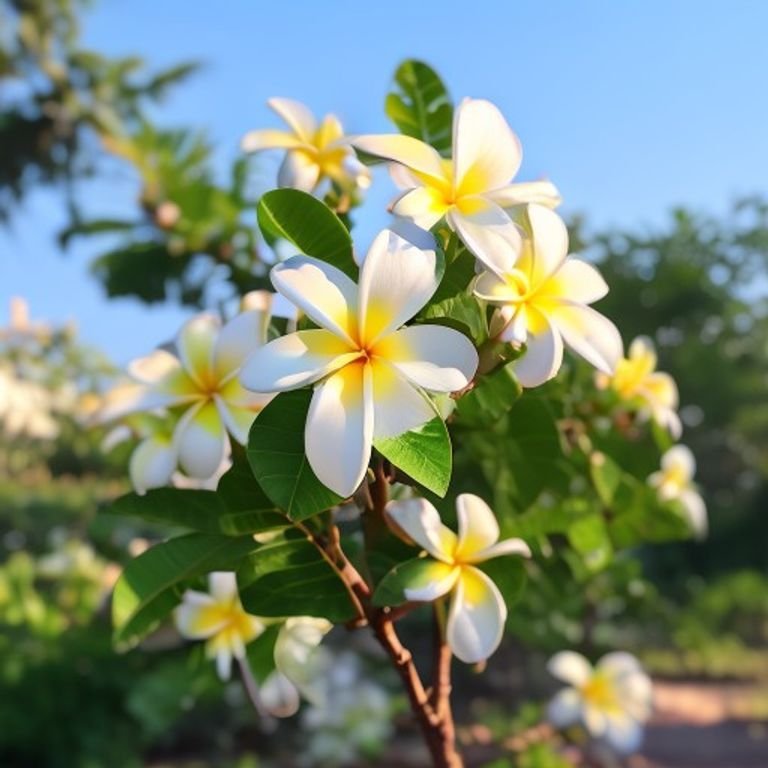
- Flowers: The pure white flowers are the star of the show. Each bloom features five overlapping petals that form a delicate pinwheel shape, often with a vibrant yellow blush at the center, creating a stunning contrast. These clusters of blossoms appear abundantly from spring through fall, transforming the tree into a fragrant spectacle.
- Foliage: While deciduous, when in leaf, the White Plumeria boasts long, leathery, dark green leaves that are typically glossy and strap-like, providing a lush backdrop for its pristine flowers.
Fragrance
Perhaps the most celebrated attribute of the White Plumeria is its intensely sweet fragrance. The scent is rich, tropical, and complex, often described as a blend of jasmine, citrus, and gardenia notes. This powerful aroma is particularly noticeable in the evenings, making it an ideal choice for gardens where you enjoy spending time after sunset.
Decorative Value
Beyond its individual beauty, the White Plumeria holds immense decorative and cultural significance. Its elegant form and prolific flowering make it a focal point in any landscape. In India, these pure white fragrant flowers are often used in temple offerings, religious ceremonies, and to adorn hair, symbolizing purity and devotion. Its striking presence also makes it a popular choice for large pots on patios, courtyard gardens, and as a specimen tree in larger landscapes.
Growing Requirements
To ensure your White Plumeria thrives in the Indian climate, understanding its basic needs is crucial:
- Light: White Plumeria absolutely thrives in full sun. It needs at least 6-8 hours of direct sunlight daily to produce abundant blooms. In the intense Indian sun, some afternoon shade might be beneficial in extremely hot regions to prevent leaf scorch, but generally, more sun equals more flowers.
- Water: This plant is remarkably drought tolerant once established, making it suitable for many Indian gardens. Water thoroughly when the top few inches of soil feel dry. During its active growing and flowering season (spring to fall), it appreciates regular watering. However, reduce watering significantly in winter when the plant is deciduous and dormant to prevent root rot. Overwatering is a common killer of Plumerias.
- Temperature: Being a tropical plant, Plumeria alba loves warmth. It thrives in temperatures between 20°C to 35°C. It can tolerate short periods of cooler temperatures but must be protected from frost, which can severely damage or kill the plant. In regions experiencing cold winters, container growing allows you to move the plant indoors.
- Humidity: White Plumeria is quite adaptable to varying humidity levels. While it appreciates moderate to high humidity typical of many Indian regions, it does not strictly require it and performs well even in drier climates as long as its watering needs are met carefully.
- Soil: Well-drained soil is paramount for Plumeria. It dislikes soggy feet. A sandy loam or loamy soil enriched with organic matter works best. Good drainage prevents root rot, a common issue for this plant.
- Potting Mix: If growing in pots, use a well-draining potting mix specifically formulated for succulents or cacti, or create your own by mixing regular potting soil with perlite, coarse sand, and a bit of compost. Ensure the pot has ample drainage holes.
- Fertilizer: During the active growing and flowering season (spring to fall), feed your White Plumeria every 2-4 weeks with a balanced fertilizer, or one higher in phosphorus to encourage blooming. Avoid high-nitrogen fertilizers as they promote leafy growth at the expense of flowers. Stop fertilizing in late fall and winter.
How to Care for This Plant
Caring for your White Plumeria is a rewarding experience. Here’s a practical guide:
- Planting: Choose a sunny spot with well-drained soil for your White Plumeria. If planting in a pot, select a large container that can accommodate its growth. Ensure the plant is placed at the same depth as it was in its nursery pot.
- Watering Schedule: As mentioned, water deeply but infrequently once established. Allow the soil to dry out between waterings. In hotter months, you might need to water more often. Always reduce watering drastically in winter.
- Pruning: Prune your Plumeria to maintain shape, remove dead or diseased branches, and encourage branching, which leads to more flowers. The best time to prune is in late winter or early spring before new growth begins. Be aware that Plumeria sap can be irritating, so wear gloves.
- Pest and Disease Monitoring: Regularly inspect your plant for signs of pests or diseases (see Common Problems section). Early detection is key to effective treatment.
- Winter Care (Deciduous Nature): Don’t be alarmed when your White Plumeria sheds its leaves in winter. This is its natural dormant period. Reduce watering, stop fertilizing, and if you live in a region with frost, move potted plants indoors or provide frost protection for garden plants.
- Propagation: White Plumeria can be easily propagated from stem cuttings. Take cuttings in late spring or early summer, allow them to callus for a few days, then plant them in well-draining soil. Keep the soil slightly moist until roots establish.
Common Problems and Solutions
While relatively robust, White Plumeria can encounter a few issues:
- Yellow Leaves: This can be caused by several factors. Overwatering is a primary culprit, leading to root issues. It can also indicate a nutrient deficiency (like nitrogen) or, during the fall, it might simply be the plant preparing for dormancy and shedding older leaves. Adjust watering, fertilize appropriately, and observe the season.
- Rust Fungus: This is a common problem, especially during humid conditions. It appears as orange or rust-colored powdery spots, primarily on the undersides of leaves.
- Solution: Remove and destroy infected leaves. Improve air circulation around the plant. Apply a suitable fungicide as per product instructions.
- Pests (Mealybugs, Spider Mites): These sap-sucking pests can weaken the plant. Mealybugs look like tiny white cottony masses, while spider mites cause stippling on leaves and fine webbing.
- Solution: For mild infestations, wipe off pests with a cotton swab dipped in rubbing alcohol. For heavier infestations, use neem oil spray or an insecticidal soap, ensuring thorough coverage, especially on leaf undersides.
- Root Rot: Caused by consistently wet, poorly draining soil. Symptoms include yellowing leaves, wilting, and a general decline in plant health.
- Solution: Prevention is key – ensure excellent drainage. If detected early, repotting the plant into fresh, well-draining soil after trimming away rotten roots might save it.
- Poor Flowering: The most common reason for a lack of blooms is insufficient sunlight. Other factors include too much nitrogen fertilizer (promoting leaves over flowers) or inadequate phosphorus.
- Solution: Ensure your White Plumeria receives at least 6-8 hours of direct sun. Use a balanced or phosphorus-rich fertilizer during the growing season.
- Slow Growth: Can be due to insufficient light, nutrient deficiencies, or compacted soil.
- Solution: Provide adequate sunlight, fertilize regularly during the growing season, and ensure good soil aeration.
- Leaf Drop in Winter: This is entirely normal for Plumeria alba, as it is a deciduous tree.
- Solution: No action needed, simply reduce watering and let the plant rest. New leaves will emerge in spring.
Benefits
Beyond its aesthetic appeal, the White Plumeria offers several benefits for your garden and home:
- Intense Sweet Fragrance: The primary draw for many, its powerful and intoxicating scent can transform your garden into a fragrant paradise, especially during the evenings. This makes the frangipani a perfect choice for planting near windows, seating areas, or along pathways.
- Pure White Blooms: The pristine white flowers are exceptionally elegant and versatile, complementing any garden design and adding a touch of serene beauty.
- Temple Use and Cultural Significance: In India, the White Plumeria flowers are deeply intertwined with cultural and religious practices, making it a revered plant for temple gardens and home altars.
- Drought Tolerant: Once established, its ability to withstand dry periods makes it an excellent choice for water-wise gardening, a significant advantage in many parts of India.
- Home Decoration & Landscaping: Whether as a striking specimen tree in a large garden, a fragrant accent in a courtyard, or potted on a balcony, its decorative value is immense. It contributes greatly to creating a tropical ambiance.
- Pollinator Friendly: While Plumeria doesn’t produce nectar, its strong fragrance attracts specific nocturnal moths and other pollinators that are tricked into visiting the flowers, thus contributing to local biodiversity.
Frequently Asked Questions
Why do White Plumeria leaves fall in winter?
Leaf drop in winter is completely normal for White Plumeria (Plumeria alba) as it is a deciduous plant. It’s the plant’s natural way of entering dormancy, conserving energy during cooler, drier months. New leaves will typically emerge in spring.
How can I propagate White Plumeria?
White Plumeria is most commonly and easily propagated from stem cuttings. Take a healthy, mature stem cutting about 12-18 inches long in late spring or early summer. Allow the cut end to dry and callus for several days (this prevents rot) before planting it about 4-6 inches deep in a well-draining potting mix. Keep the soil lightly moist but not soggy until roots develop.
Is the fragrance of White Plumeria stronger at night?
Yes, the fragrance of White Plumeria is indeed noticeably stronger, especially in the evenings and at night. This is a common characteristic of many night-blooming or night-fragrant flowers, which have evolved to attract nocturnal pollinators.
Final Thoughts
Bringing a White Plumeria into your garden or home is an invitation to embrace natural beauty, captivating fragrance, and a touch of serene elegance. With its dazzling pure white blooms and intoxicating scent, the frangipani promises to be a source of joy and tranquility for years to come. While it asks for a sunny spot and well-drained soil, its moderate care requirements and drought tolerance make it a resilient and rewarding plant for Indian gardeners.
We hope this guide empowers you to cultivate a thriving White Plumeria. Remember, Plantrea is the online plant platform from Wynorg, helping plant lovers across India discover quality plants, practical growing advice, and trusted nursery sourcing.
Interested in This Plant?
If the enchanting White Plumeria has captured your imagination, you might have more questions about making it a part of your green space. Our friendly Plant Expert chat, located at the bottom-right corner of every page, is here to assist you.
You can use the Plant Expert to quickly check if the beautiful White Plumeria is currently available. It’s also a fantastic resource for getting personalised plant recommendations tailored to your specific home or garden conditions. Perhaps you’re looking for other white fragrant flower varieties, or plants that thrive in similar full sun conditions – our experts can guide you.
Don’t hesitate to ask any plant care questions you might have about your White Plumeria or any other plant. And if, by chance, the White Plumeria isn’t currently available, our Plant Expert can help you discover suitable alternatives that will bring similar beauty and fragrance to your garden. Think of our Plant Expert as your experienced gardening assistant, ready to share knowledge and help you cultivate your green dreams.
Want to buy this plant? Visit https://plantrea.com/shop-2/