Durian Monthong Care Guide: Cultivating the King of Fruits in Your Indian Garden
The Durian, famously crowned the “King of Fruits,” holds a special allure for fruit enthusiasts and adventurous gardeners across India. Its unique, rich flavour and creamy texture make it a highly sought-after delicacy. While primarily associated with Southeast Asia, with careful attention, it’s entirely possible to cultivate this magnificent fruit tree in suitable Indian climates. This comprehensive guide, brought to you by Plantrea, the online plant platform by Wynorg, a trusted Indian brand known for delivering healthy live plants safely across India, will help you understand how to nurture your Durian Monthong bud plant to thrive and potentially bear its legendary fruit.
Whether you’re an experienced gardener looking for a new challenge or a curious beginner eager to grow exotic fruits, the Durian Monthong offers a rewarding journey. Its striking appearance and the promise of its extraordinary fruit make it a truly captivating addition to larger home gardens, especially in tropical and subtropical regions of India.
Botanical Overview
The Durian, specifically the ‘Monthong’ cultivar, is a fascinating member of the plant kingdom. Understanding its botanical background is key to providing optimal care.
- Botanical name: The Durian belongs to the species Durio zibethinus. ‘Monthong’ is a highly prized cultivar, originating from Thailand, known for its large fruit, thick flesh, and relatively less pungent aroma compared to some other varieties.
- Plant family: It is a member of the Malvaceae family, which also includes plants like hibiscus and okra. Historically, it was placed in the Bombacaceae family.
- Origin: The genus Durio is native to Southeast Asia, particularly Malaysia, Indonesia, Brunei, and the southern Philippines. The Monthong cultivar specifically originated in Thailand.
- Plant type: It is a large, evergreen tropical fruit tree.
- Growth habit: Durian trees are robust, upright growers that can reach significant heights in their natural habitat. In cultivation, with proper pruning, they can be managed to a more accessible size. A ‘bud plant’ signifies that it has been propagated vegetatively, typically by budding or grafting, ensuring it retains the characteristics of the parent Monthong tree and fruits much earlier than a seed-grown plant.
Why People Love This Plant
Beyond its reputation as the “King of Fruits,” the Durian Monthong has several characteristics that make it a beloved, albeit challenging, plant for tropical gardeners.
Appearance
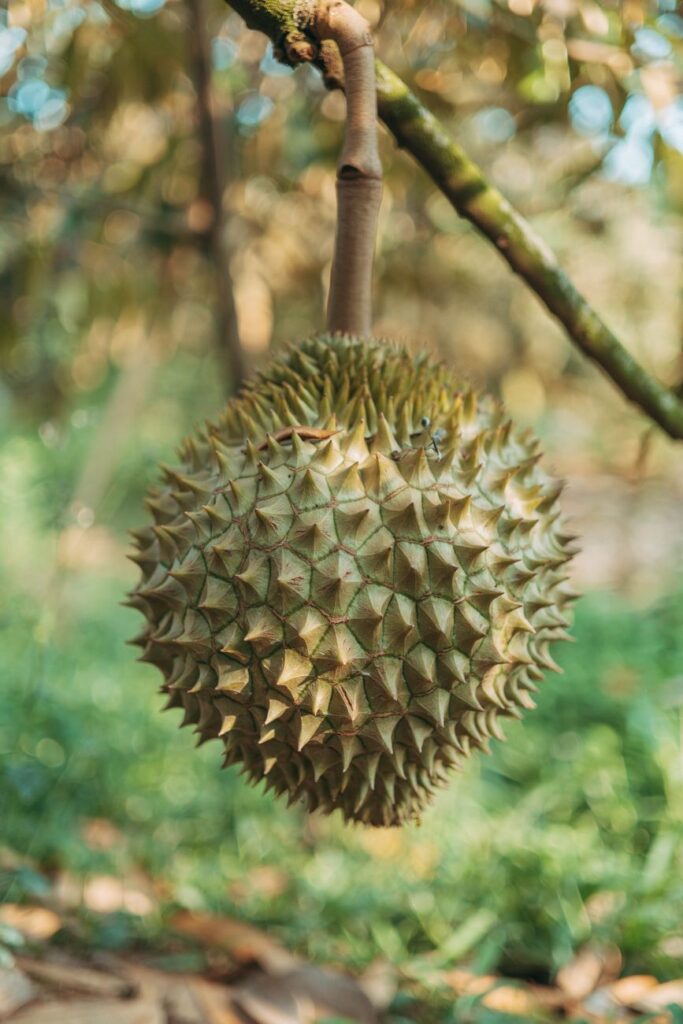
The Durian tree itself is quite impressive. It features a sturdy trunk and dense canopy of glossy, dark green leaves. The leaves are typically oblong-lanceolate, with a smooth, shiny upper surface and a coppery or silvery underside. The fruit, however, is the real showstopper. It’s large, oval to round, and covered in formidable, sharp spines, giving it a distinctive, almost prehistoric look. When ripe, the fruit turns a yellowish-green to brownish colour.
Flowers
Durian flowers are pale white to yellowish, large, and bell-shaped, emerging in clusters directly from the main branches and trunk (a phenomenon called cauliflory). They typically open in the evening and are pollinated by bats and moths, emitting a strong, sometimes musky fragrance to attract these nocturnal visitors.
Foliage
The foliage of the Durian tree is attractive and dense, providing ample shade. The leaves have a slightly leathery texture and are quite resilient. Young leaves often emerge with a reddish or bronze tint before maturing to a deep green.
Fragrance
The fragrance of the Durian fruit is legendary and perhaps its most polarizing characteristic. Monthong is often considered one of the milder varieties in terms of aroma, but it is still distinctly powerful. Described by some as a mix of cheese, onions, and sweet fruit, it’s an experience unto itself. While the smell can be intense, especially indoors, the rich, sweet, custardy flesh within is highly prized by those who appreciate its unique flavour profile.
Decorative Value
While primarily grown for its fruit, a mature Durian tree, with its stately form and glossy foliage, can be a magnificent specimen in a large garden or orchard. The sight of its large, spiky fruits hanging from the branches is certainly a conversation starter and adds an exotic, tropical appeal to any landscape where it can thrive.
Growing Requirements
Cultivating Durian Monthong in India requires attention to its specific needs, especially concerning climate and soil conditions.
Light
Durian trees are sun-loving tropical plants. They require full sunlight for at least 6-8 hours a day to grow vigorously and produce fruit. Young plants can benefit from partial shade during the hottest part of the day in extremely scorching climates, but mature trees need unobstructed sun.
Water
Consistent and ample watering is crucial for Durian, especially during its establishment phase and throughout the flowering and fruiting periods. The soil should be kept consistently moist but never waterlogged. Overwatering can quickly lead to root rot, which is detrimental to the plant. During dry spells, especially in regions with distinct dry seasons, regular watering is essential. Reduce watering slightly during its dormant period or cooler months, if any.
Temperature
Being a tropical plant, Durian thrives in warm, humid conditions. Ideal temperatures range between 24°C to 30°C. They are not tolerant of cold temperatures or frost; prolonged exposure to temperatures below 10°C can severely damage or kill the plant. This makes them suitable for cultivation in the warmer, more humid coastal and southern regions of India.
Humidity
High humidity (75-80% or more) is preferred by Durian trees, mirroring their native rainforest environment. In areas with lower humidity, regular misting of young plants or strategic placement near water bodies can help create a more favourable microclimate. Larger trees typically manage better with ambient humidity.
Soil
Durian Monthong prefers deep, fertile, well-draining loamy soils rich in organic matter. A slightly acidic to neutral pH (5.5-7.0) is ideal. Heavy clay soils that retain too much water are unsuitable as they promote root rot. Sandy soils, if amended with sufficient organic matter, can work but might require more frequent watering and nutrient replenishment.
Potting Mix
For young bud plants growing in pots, a well-draining potting mix is paramount. A good mix can consist of equal parts rich garden soil, coco peat or compost, and perlite or coarse sand to ensure excellent drainage. Ensure the pot has ample drainage holes.
Fertilizer
Durian trees are heavy feeders. Regular fertilization is necessary for healthy growth and fruit production. Young plants benefit from a balanced NPK fertilizer (e.g., 10-10-10) every 1-2 months. As the tree matures and approaches fruiting age, switch to a fertilizer higher in phosphorus and potassium (e.g., 6-8-12 or similar) to encourage flowering and fruiting. Apply fertilizer around the drip line and water it in thoroughly. Organic fertilizers like well-rotted cow dung or compost can also be incorporated regularly to improve soil fertility.
How to Care for This Plant
Caring for your Durian Monthong bud plant involves a few key practices to ensure its robust health and eventual fruiting.
- Planting: When planting a young Durian bud plant, choose a location with full sun and good drainage. Dig a hole twice as wide as the root ball and just as deep. Carefully remove the plant from its nursery pot, place it in the hole, ensuring the top of the root ball is level with the soil surface. Backfill with amended soil, gently firming it around the base, and water thoroughly. For container growing, select a large pot (at least 20-25 gallons for a young plant) to allow for root development.
- Watering Schedule: Establish a consistent watering schedule. Check the soil moisture regularly by sticking your finger about an inch or two deep. Water when the top inch of soil feels dry. During the dry season or periods of active growth and fruiting, you may need to water daily, while in the monsoon or cooler months, watering frequency can be reduced.
- Pruning: Pruning is essential for shaping the tree, promoting better air circulation, and encouraging fruit production. For young trees, focus on establishing a strong central leader and well-spaced scaffold branches. Remove any weak, crossing, or dead branches. Once the tree is mature, light annual pruning after fruiting can help maintain its size and rejuvenate growth. Remember that Durian fruits primarily on older, mature branches.
- Pest and Disease Monitoring: Regularly inspect your Durian plant for any signs of pests or diseases. Early detection is key to effective management. Look for discoloured leaves, spots, or the presence of insects.
- Weed Control: Keep the area around your Durian tree free of weeds, especially when the plant is young, as weeds compete for water and nutrients. Mulching with organic material like wood chips or straw can help suppress weeds, retain soil moisture, and provide a slow release of nutrients.
- Support: While mature Durian trees are robust, young plants, especially those with heavy fruit loads, may benefit from staking to provide support and prevent damage from strong winds.
- Seasonal Care: In tropical Indian climates, focus on consistent care year-round. During the peak monsoon, ensure excellent drainage to prevent root rot. During the dry season, prioritize consistent watering. Protect young plants from extreme heat with temporary shade cloth if necessary.
Common Problems and Solutions
Even with the best intentions, Durian plants can face challenges. Here are some common problems and their solutions:
- Yellow leaves:
- Cause: Often due to nutrient deficiency (especially nitrogen or iron), overwatering leading to root rot, or sometimes underwatering.
- Solution: Check soil moisture – if waterlogged, reduce watering frequency and improve drainage. If dry, water thoroughly. Apply a balanced liquid fertilizer or specific micronutrient supplements if deficiency is suspected. Ensure good soil aeration.
- Pests:
- Common Pests: Aphids, mealybugs, scale insects, fruit borers, and stem borers.
- Solution: For minor infestations, spray with a strong stream of water or neem oil solution. For severe cases, use appropriate organic insecticides, following instructions carefully. Prune and destroy infested parts. Encourage natural predators like ladybugs.
- Fungal diseases:
- Common Diseases: Root rot (Phytophthora), anthracnose, pink disease.
- Solution: Improve drainage to prevent root rot. For anthracnose (leaf spots), remove affected leaves and apply a copper-based fungicide. Ensure good air circulation around the plant. Proper sanitation is crucial – remove fallen leaves and fruit.
- Root rot:
- Cause: Primarily caused by consistently waterlogged soil and poor drainage, often exacerbated by heavy clay soils.
- Solution: Ensure excellent drainage in both pots and garden beds. Amend heavy soils with sand and organic matter. Water only when the topsoil is dry. In severe cases, the plant may need to be carefully repotted or replanted in a better-draining location.
- Poor fruiting:
- Cause: Can be due to lack of pollination (though Monthong is often self-fertile to some extent, cross-pollination can improve yield), insufficient light, inadequate nutrients, incorrect pruning, or unsuitable climate (not enough dry period for flowering induction).
- Solution: Ensure the tree receives full sun. Provide adequate phosphorus and potassium fertilizer before flowering. Hand-pollination can sometimes be attempted during the evening. Ensure the tree is mature enough (bud plants typically fruit in 4-8 years).
- Slow growth:
- Cause: Often due to nutrient deficiency, insufficient light, improper watering, or poor soil conditions.
- Solution: Check all growing conditions: light, water, and soil fertility. Apply a balanced NPK fertilizer. Ensure the plant is not root-bound if in a pot.
- Leaf drop:
- Cause: Can be a reaction to environmental stress such as sudden changes in temperature, underwatering, overwatering, or transplant shock.
- Solution: Identify and correct the stress factor. Provide consistent care. Ensure steady moisture levels and protection from extreme conditions.
Benefits
Growing Durian Monthong, despite its demanding nature, offers several unique benefits.
- Exceptional Fruit: The primary benefit is, of course, the extraordinary fruit itself. Monthong Durian is highly prized for its sweet, custardy, rich yellow flesh and smaller seeds compared to other varieties. Growing your own ensures a fresh, high-quality supply of this unique delicacy.
- Home Consumption & Culinary Delights: Fresh Durian is a gourmet experience. It can be eaten raw, used in desserts like ice cream, sticky rice, cakes, or even savoury dishes. Having your own tree provides a sustainable source.
- Landscaping: For those with large gardens or estates in suitable climates, a mature Durian tree can serve as a magnificent specimen tree, providing shade and adding a striking tropical aesthetic to the landscape.
- Economic Value: While this guide focuses on home gardening, it’s worth noting that Durian is a highly valuable cash crop in Southeast Asia, and cultivating it, even on a small scale, could offer some yield for personal consumption or local sharing.
Frequently Asked Questions
How long does a Monthong Durian bud plant take to fruit in India?
A Monthong Durian bud plant (grafted plant) is significantly faster to fruit than a seed-grown one. In ideal conditions in India’s suitable tropical regions, you can expect a bud plant to start bearing fruit anywhere from 4 to 8 years after planting. This timeline can vary based on climate, soil fertility, and consistent care, especially ensuring full sun exposure and adequate water and nutrients.
What kind of soil is best for growing Durian Monthong in India?
Durian Monthong thrives in deep, fertile, well-draining loamy soils with a slightly acidic to neutral pH (5.5-7.0). The soil should be rich in organic matter to provide consistent nutrition and retain moisture without becoming waterlogged. Heavy clay soils are generally unsuitable due to poor drainage, while sandy soils need significant amendment with compost and organic matter to improve their fertility and water-holding capacity.
How do I protect my Durian plant from pests in a home garden?
Protecting your Durian Monthong from pests involves regular monitoring and proactive measures. Inspect your plant frequently for signs of pests like aphids, mealybugs, or borers. Use organic pest control methods such as neem oil sprays or insecticidal soap for common pests. Encourage beneficial insects like ladybugs. For borers, maintain tree health and consider physical removal if detected early. Maintaining good garden hygiene, like removing fallen fruit and leaves, also helps reduce pest harborage. If growing in containers, ensure the potting mix is fresh and free of pests.
Final Thoughts
Cultivating the Durian Monthong in your Indian garden is a journey that promises both challenges and immense satisfaction. With its unique flavour, the ‘King of Fruits’ is a true horticultural marvel. By providing it with the right environment – plenty of sunlight, consistent watering, rich, well-draining soil, and regular feeding – you’ll be well on your way to enjoying its legendary bounty.
Remember that patience and keen observation are your best tools in gardening. Your Durian Monthong bud plant, with consistent care, will grow into a majestic tree that not only provides delicious fruit but also adds an exotic charm to your landscape. For more detailed plant guides, practical growing advice, and to explore a wide range of quality plants sourced from trusted nurseries, continue to explore Plantrea. Plantrea is the online plant platform from Wynorg, helping plant lovers across India discover quality plants, practical growing advice, and trusted nursery sourcing.
Image by: FOX ^.ᆽ.^= ∫
https://www.pexels.com/@fox-58267