Flame Vine – Pyrostegia venusta – Masses of Orange Blooms | Wynorg Nursery
For anyone seeking a burst of vibrant colour during the cooler months, the Flame Vine (Pyrostegia venusta) is an absolute showstopper in Indian gardens. Its spectacular cascade of bright orange flowers transforms fences and walls into breathtaking tapestries, making it a beloved choice across the subcontinent. This fast-growing, evergreen climber brings unparalleled beauty, especially when much of the garden lies dormant, offering a warming embrace of colour.
Here at Plantrea, the online plant platform by Wynorg, a trusted Indian brand known for delivering healthy live plants safely across India, we understand the desire for plants that not only thrive but also add dramatic flair. The Flame Vine, with its easy-care nature and dazzling display, truly stands out as an exceptional specimen for both seasoned gardeners and enthusiastic beginners alike.
Botanical Overview
The botanical identity of this magnificent climber is as striking as its appearance. Knowing its background helps us understand its needs and appreciate its natural beauty.
- Botanical Name: Pyrostegia venusta. The genus name “Pyrostegia” comes from Greek words “pyro” (fire) and “stegia” (a covering), aptly describing its fiery floral display. “Venusta” means beautiful or charming.
- Plant Family: It belongs to the Bignoniaceae family, also known as the trumpet vine family. This family includes many other popular flowering vines and trees, often characterised by their showy, trumpet-shaped flowers.
- Origin: The Flame Vine is native to the tropical and subtropical regions of South America, particularly Brazil, Argentina, Paraguay, and Bolivia. This origin explains its love for warm climates and ability to flourish in diverse Indian conditions.
- Plant Type: It is a vigorous, woody-stemmed flowering vine and climber.
- Growth Habit: This vine is an enthusiastic climber, using delicate tendrils to grasp onto surfaces. It can reach impressive heights, often scaling 20-30 feet or more when given adequate support, forming a dense curtain of foliage and flowers.
Why People Love This Plant
The sheer popularity of the Flame Vine, or orange climber as it’s affectionately known, stems from several captivating features that make it an undeniable favourite in Indian landscapes.
Appearance
The overall appearance of the Flame Vine is one of lush vitality. Its dense, evergreen foliage provides a verdant backdrop for the star of the show – its electrifying orange flowers. When in bloom, the plant is completely covered, creating a breathtaking visual spectacle that stops passersby in their tracks.
Flowers
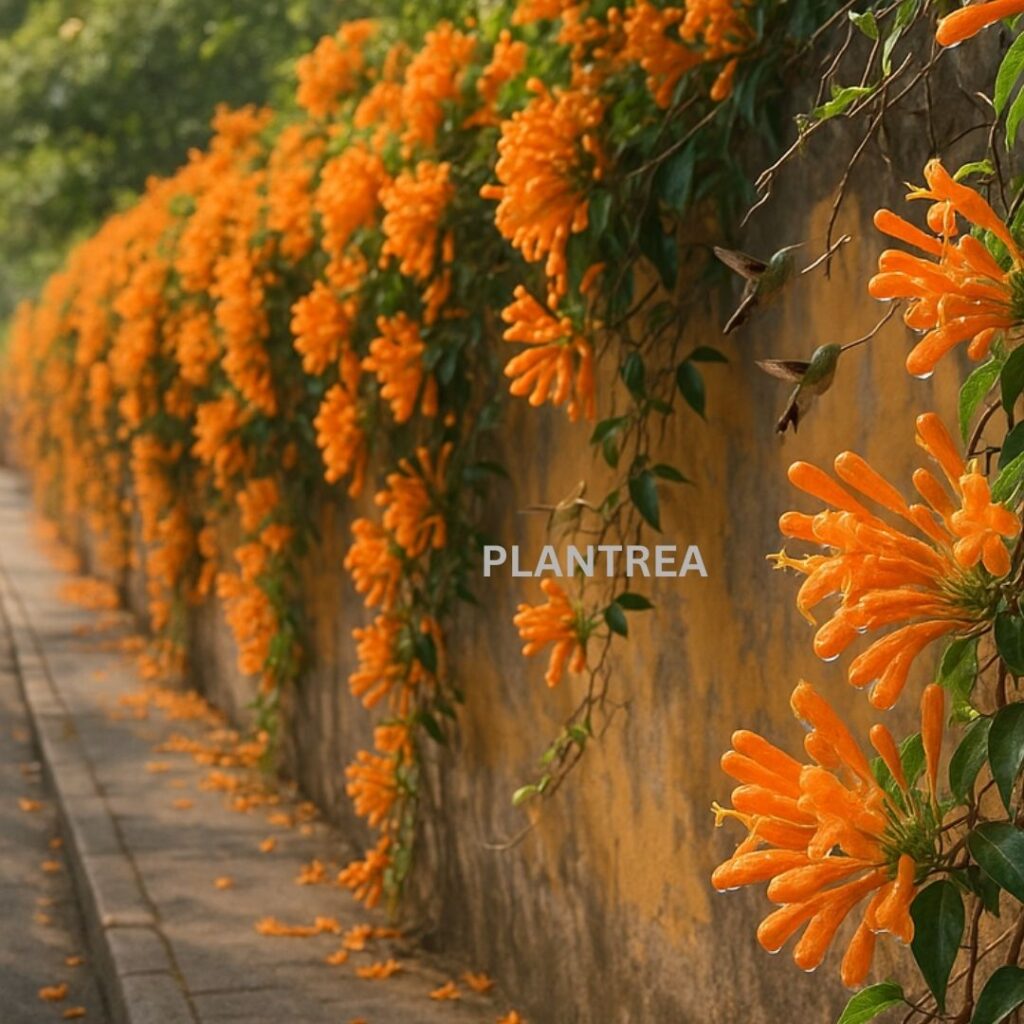
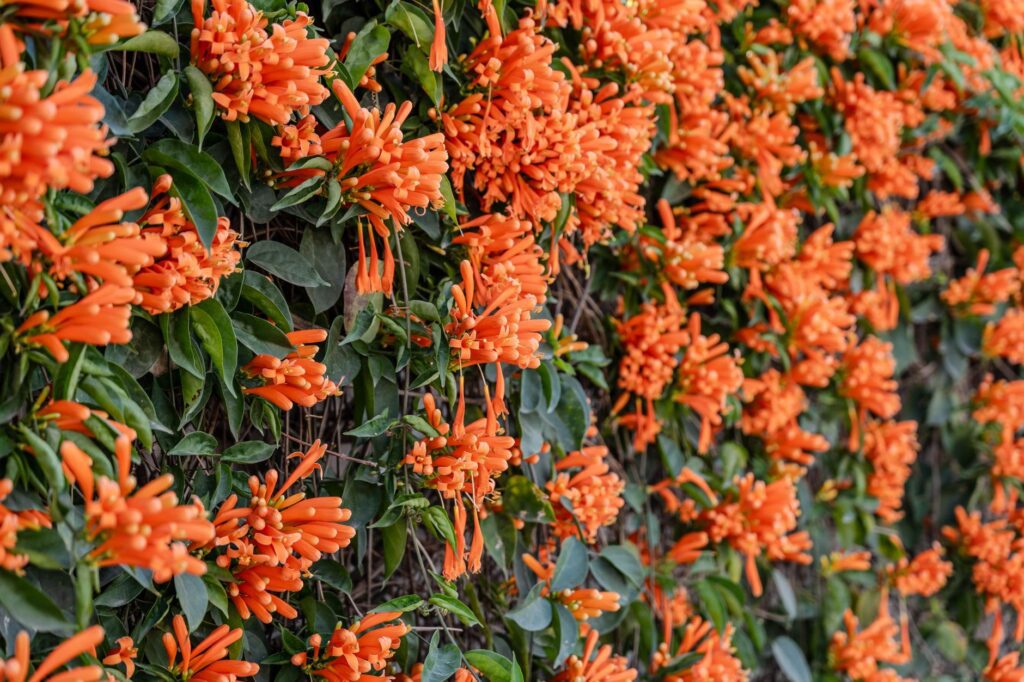
The flowers are undoubtedly the main attraction. These bright orange, tubular blooms are clustered together, resembling small, fiery trumpets. What makes them truly special is their flowering season: winter to spring. During these cooler months, when many other garden plants are either dormant or offering less colour, the Flame Vine erupts in a glorious blaze, bringing warmth and cheer to the landscape. This winter flowering vine is a true marvel, providing a much-needed splash of vibrancy.
Foliage
Even when not in bloom, the foliage of Pyrostegia venusta is attractive. The leaves are typically glossy green, ovate, and grow densely, offering excellent coverage for walls, fences, and pergolas. It remains evergreen in most tropical and subtropical climates, ensuring year-round greenery.
Fragrance
While the Flame Vine is celebrated for its visual brilliance, it is not known for any significant fragrance. Its beauty is purely a feast for the eyes.
Decorative Value
The decorative value of the Flame Vine is immense. It’s perfectly suited for transforming unsightly walls or fences into living works of art. Its ability to cover large areas quickly makes it ideal for privacy screens, accentuating garden entry points, or simply adding a dramatic focal point to any large garden. For those with a bare compound wall or a desire to soften harsh architectural lines, the Flame Vine is an unparalleled choice, creating a natural, vibrant tapestry.
Growing Requirements
To ensure your Flame Vine thrives and delivers its spectacular winter display, understanding its fundamental growing requirements is key. Luckily, this resilient plant is quite forgiving.
Light
Full Sun is Paramount: The Flame Vine absolutely revels in sunlight. For maximum blooms and vigorous growth, it requires at least 6-8 hours of direct sunlight daily. Planting it in a location that receives full sun throughout the day is crucial. While it can tolerate partial shade, insufficient light will significantly reduce or even prevent flowering, leaving you with lush foliage but few, if any, of its characteristic orange blossoms.
Water
Moderate Watering: Once established, the Flame Vine is relatively drought-tolerant, but it performs best with moderate, consistent watering. During its initial establishment phase (first year), water regularly to keep the soil consistently moist but never waterlogged. Once mature, allow the top few inches of soil to dry out completely between waterings. During prolonged dry spells or intense heat, increase watering frequency. Reduce watering during its dormant period after flowering.
Temperature
Warm to Mild Climates: Being a tropical vine, Pyrostegia venusta thrives in warm to mild temperatures. It is well-suited to the Indian climate, tolerating both the heat of summer and the cooler, dry winters typical of many regions. It can withstand short periods of light frost but prolonged freezing temperatures can damage or kill it. In most of India, this is not a concern, and the cool winters actually encourage better blooming.
Humidity
Adapts Well: The Flame Vine is quite adaptable to varying humidity levels found across India. It doesn’t require specific high humidity, performing well in both dry and moderately humid conditions.
Soil
Well-Draining and Fertile: This plant isn’t overly fussy about soil type, but it absolutely demands good drainage. Heavy, waterlogged soils can lead to root rot. A fertile, loamy soil enriched with organic matter is ideal. If your soil is heavy clay, amend it generously with compost, sand, or perlite to improve drainage and aeration. A slightly acidic to neutral pH (6.0-7.0) is generally preferred.
Potting Mix
Due to its vigorous growth and large size, the Flame Vine is typically planted directly in the ground rather than in pots. However, if you wish to grow a young plant in a very large container temporarily, use a high-quality, well-draining potting mix. Ensure the pot has ample drainage holes. Regular pruning will be essential to keep it manageable in a container.
Fertilizer
Balanced Feeding: During its main growing season (spring and summer), feed your Flame Vine with a balanced liquid fertilizer every 4-6 weeks. As autumn approaches and you want to encourage flowering, switch to a fertilizer higher in phosphorus (the middle number in the NPK ratio) to promote blooms. Avoid excessive nitrogen, as this will encourage lush foliage growth at the expense of flowers. Once the plant is well-established and blooming profusely, it may require less frequent feeding, often benefiting from a single application of compost around its base annually.
How to Care for This Plant
Caring for the Flame Vine is relatively straightforward, making it an excellent choice for gardeners of all experience levels. Here’s a step-by-step guide to keep your orange climber thriving.
- Choosing the Right Location: As highlighted, full sun is non-negotiable for abundant blooms. Select a spot that receives direct sunlight for the majority of the day. Consider the size this vine will achieve and plant it away from delicate structures or small plants it might overwhelm.
- Planting: Dig a hole twice as wide and just as deep as the root ball. Amend the excavated soil with plenty of compost or well-rotted manure, especially if your soil is poor. Gently remove the plant from its nursery pot, loosen any circling roots, and place it in the hole so that the top of the root ball is level with the surrounding ground. Backfill with the amended soil, firm gently, and water thoroughly.
- Providing Strong Support: This is a crucial step. The Flame Vine can become quite heavy as it matures, so it requires sturdy support from day one. A strong trellis, robust pergola, a solid fence, or a compound wall with wires or anchors are ideal. Train young shoots onto the support initially to guide its growth.
- Watering Schedule: After planting, maintain consistent moisture for the first few months. Once established, water deeply when the top few inches of soil feel dry. In the peak of Indian summer, this might mean every few days, while in cooler months, it could be once a week or less. Always check soil moisture before watering.
- Pruning for Health and Blooms: The best time to prune your Flame Vine is immediately after its main flowering season, usually in late spring or early summer.
- Maintenance Pruning: Remove any dead, damaged, or diseased branches.
- Shape and Size Control: This vine is a vigorous grower, so regular pruning is essential to keep it in bounds and maintain its desired shape. Don’t be afraid to cut back long, straggly stems.
- Promoting Bushiness and Blooms: Pruning encourages new growth, and new growth often leads to more flowers in the subsequent season. You can also thin out dense areas to improve air circulation. Avoid heavy pruning in late autumn or winter, as you might cut off the flower buds that are forming for the upcoming bloom.
- Fertilisation: Follow the fertilizer guidelines mentioned in the “Growing Requirements” section. A sprinkle of bone meal around the base in late autumn can also help promote flowering.
- Mulching: Apply a 2-3 inch layer of organic mulch (like compost, bark chips, or straw) around the base of the plant. Mulch helps retain soil moisture, suppress weeds, and slowly enriches the soil as it breaks down. Keep mulch a few inches away from the stem to prevent rot.
Common Problems and Solutions
While the Flame Vine is generally a robust and easy-care plant, understanding potential issues can help you quickly address them and keep your vine looking its best.
- Yellow Leaves:
- Cause: Often a sign of improper watering (either too much or too little) or nutrient deficiency.
- Solution: Check soil moisture. If soggy, reduce watering. If bone dry, water deeply. Ensure good drainage. If watering is correct, consider a balanced liquid fertilizer to address potential nutrient deficiencies.
- Pests:
- Cause: Generally pest-resistant, but occasionally, young shoots or new growth might attract aphids or mealybugs.
- Solution: A strong spray of water can dislodge most pests. For more persistent infestations, use neem oil spray or an insecticidal soap, targeting affected areas.
- Fungal Diseases:
- Cause: Rare, but root rot can occur in consistently waterlogged soil.
- Solution: Ensure excellent drainage. If planting in the ground, amend heavy clay soils. If in a pot, use a well-draining mix and ensure drainage holes are clear.
- Poor Flowering:
- Cause: The most common reasons are insufficient sunlight, immature plant (often takes 2 years to establish and bloom profusely), incorrect pruning (pruning at the wrong time of year), or a lack of phosphorus.
- Solution: Ensure the plant receives full sun. Be patient for younger plants. Prune only after the flowering season ends. Use a phosphorus-rich fertilizer in autumn to encourage bud formation.
- Slow Growth:
- Cause: This can be due to a young plant still establishing, poor soil nutrition, or inadequate sunlight and water.
- Solution: Provide full sun, regular watering, and fertilise during the growing season. Ensure the soil is rich in organic matter. Patience is key for initial growth.
- Leaf Drop:
- Cause: Can be a stress response to sudden environmental changes, extreme temperatures, or severe over/underwatering.
- Solution: Identify and rectify the underlying stress factor. Ensure consistent care and stable conditions where possible.
- Can Become Heavy and Requires Strong Support:
- Cause: This is a characteristic of its vigorous growth habit rather than a problem.
- Solution: Plan for this from the outset. Install robust pergolas, strong trellises, or reinforced wall supports. Regularly train new growth to spread evenly across the support structure.
- May Not Bloom in Shade:
- Cause: Insufficient light directly impacts the plant’s ability to produce flower buds.
- Solution: Relocate the plant to a full sun position if possible, or prune surrounding vegetation that might be casting shade.
Benefits
Beyond its stunning aesthetics, the Flame Vine offers several compelling benefits that make it a valuable addition to Indian gardens.
- Home Decoration: The undisputed champion of winter garden decoration. Its fiery orange blooms create an unforgettable visual spectacle, turning ordinary spaces into extraordinary ones. It adds a touch of tropical grandeur and vibrant energy to any home or garden.
- Landscaping: Ideal for covering large areas quickly, making it a landscaper’s dream for creating living walls, privacy screens, or accentuating garden features. It’s perfect for large fences, compound walls, pergolas, and garden entry points where a dense, flowering curtain is desired.
- Pollinator Friendly: The tubular flowers of the Flame Vine are perfectly shaped to attract hummingbirds and sunbirds. These fascinating birds are drawn to the nectar, making your garden a lively hub of activity and supporting local biodiversity.
- Winter Color: Its most celebrated benefit is providing an explosion of colour during the winter months when most other plants are dormant. This makes it an invaluable plant for year-round interest in the garden.
- Very Fast Growing: If you’re looking for quick coverage, the Flame Vine delivers. Its rapid growth habit means you won’t have to wait years for it to fill out an area, providing excellent coverage relatively quickly.
Frequently Asked Questions
Does the Flame Vine bloom in its first year?
While vigorous, the Flame Vine usually takes about two years to fully establish itself and begin blooming profusely. You might see a few sporadic flowers in the first year, but a truly spectacular display typically begins from the second year onwards, once the plant has developed a strong root system and sufficient growth.
Is the Flame Vine suitable for Delhi winters?
Yes, absolutely! The Flame Vine thrives beautifully in the cool, dry winters characteristic of Delhi and many other parts of North India. In fact, these cooler temperatures are often ideal for stimulating a more prolific and vibrant flowering display. Just ensure it receives plenty of sunlight even during winter.
How can I propagate the Flame Vine?
The Flame Vine is most easily propagated through stem cuttings. The best time for this is during the monsoon season when humidity is naturally high, which aids in rooting. Take semi-hardwood cuttings about 6-8 inches long, remove the leaves from the lower half, and dip the cut end in rooting hormone (optional but recommended). Plant them in a well-draining potting mix and keep them in a warm, humid environment away from direct, harsh sunlight until roots develop.
Final Thoughts
The Flame Vine, or Pyrostegia venusta, is more than just a plant; it’s a winter celebration for your garden. Its ease of care, rapid growth, and, most importantly, its dazzling display of orange blossoms make it an indispensable choice for anyone looking to add drama and vibrant beauty to their outdoor space. Whether you’re aiming to cover a large wall, create a stunning entrance, or simply enjoy the company of sunbirds, this orange climber delivers on all fronts.
Embracing the Flame Vine in your garden is an invitation to witness nature’s fiery artistry, transforming your landscape into a living canvas. For more practical growing advice and to discover a wide array of quality plants that thrive in Indian conditions, explore the extensive guides on Plantrea. Plantrea is the online plant platform from Wynorg, helping plant lovers across India discover quality plants, practical growing advice, and trusted nursery sourcing.
Image by: Rajesh S Balouria
https://www.pexels.com/@rajesh-s-balouria-1289088