
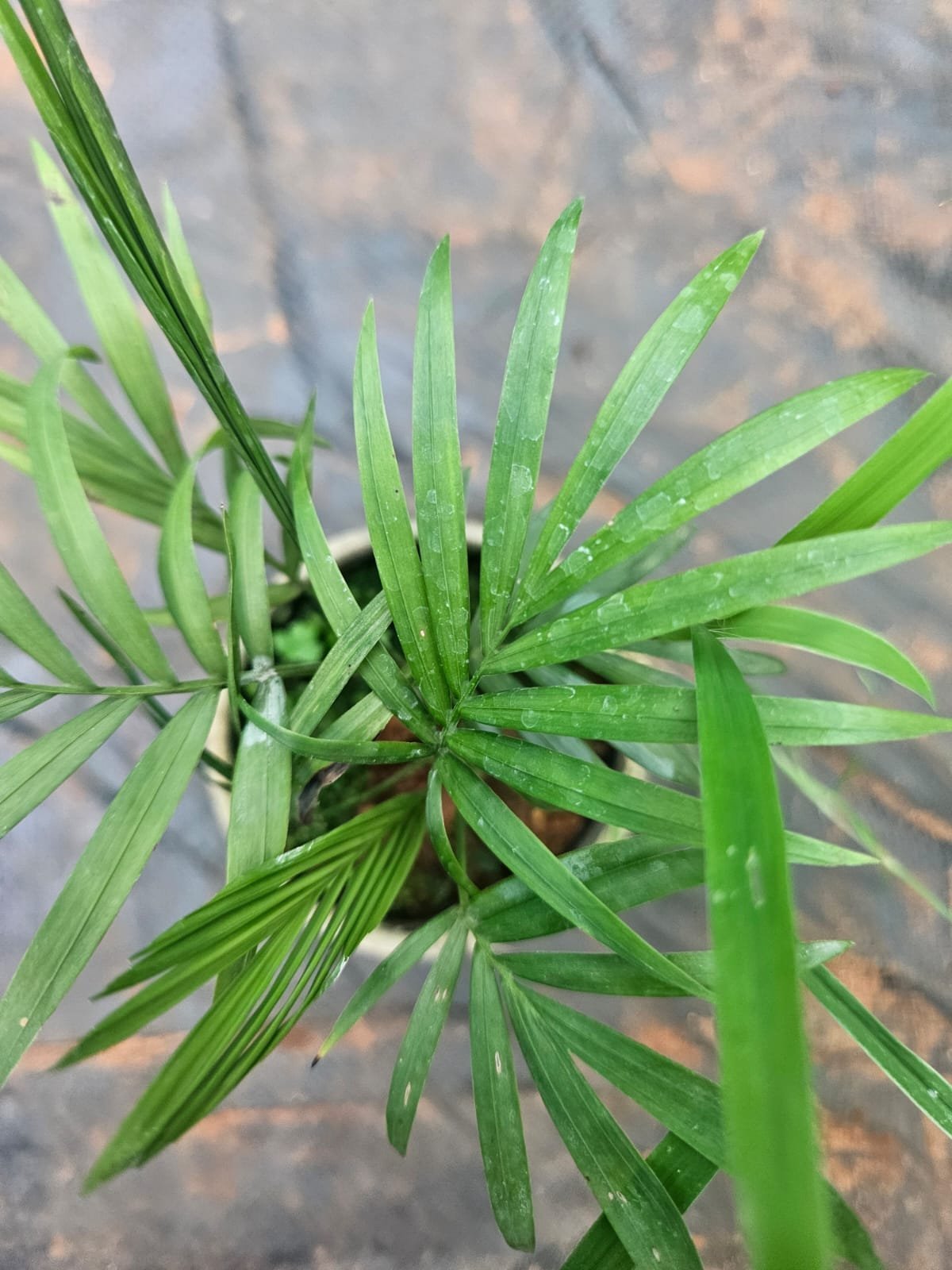
The Areca Palm, scientifically known as Dypsis lutescens, is a widely popular and elegant indoor plant cherished for its lush, feathery, arching fronds. Native to Madagascar, it brings a vibrant tropical feel to any space with its bright green foliage and multi-stemmed growth habit. Often used to soften interiors and add a touch of natural beauty, it’s a versatile choice for homes and offices across India, particularly thriving in the warm, humid conditions of states like Kerala. Its graceful appearance and significant air-purifying qualities make it a highly sought-after plant for creating a serene and healthy environment.
Benefits:
Excellent air purifier (removes toxins like formaldehyde, xylene, and toluene), increases indoor humidity, enhances aesthetic appeal, creates a tropical ambiance, relatively low maintenance, pet-friendly.
Care Instructions:
Light: Place in a spot with bright, indirect sunlight. Avoid direct harsh sun, especially in the afternoon, which can scorch fronds. Watering: Water thoroughly when the top 1-2 inches of soil feel dry. Ensure good drainage to prevent root rot. Reduce watering slightly in winter. Humidity: Thrives in high humidity. Mist the leaves regularly, especially in dry climates or during air-conditioned indoor use, or place a pebble tray nearby. Soil: Use a well-draining potting mix rich in organic matter. A mix suitable for palms or a blend of potting soil, perlite, and coco peat works well. Fertilizing: Feed with a balanced liquid fertilizer every 2-4 weeks during the growing season (spring and summer). Reduce or stop feeding in autumn and winter. Pruning: Remove any yellow or brown fronds at the base as needed to maintain appearance and health. Avoid trimming green tips of fronds. Repotting: Repot every 2-3 years or when the plant becomes root-bound, moving to a pot one size larger.
Ideal For:
Living rooms, bedrooms, offices, lobbies, hallways, shaded balconies, tropical gardens, anyone seeking an elegant air-purifying plant, gifting.
Common Problems:
Brown leaf tips: Often caused by low humidity, inconsistent watering (both under and overwatering), or fluoride/salt buildup in tap water. Yellowing leaves: Can indicate overwatering, nutrient deficiency, or too much direct sunlight. Pests: Susceptible to spider mites, mealybugs, and scale insects, especially in dry conditions. Inspect regularly and treat with neem oil or insecticidal soap.


Reviews
There are no reviews yet.