Tabebuia – Pink Trumpet Tree for Winter Blooms | Wynorg Nursery
Imagine a tree that, in the heart of winter, sheds all its leaves to burst into an unparalleled spectacle of vibrant pink flowers. This is the magic of the Tabebuia, often known as the Pink Trumpet Tree. A true showstopper, the Tabebuia transforms gardens and landscapes into a dreamy canvas of colour when most other plants are dormant. It’s a cherished sight in many Indian homes and gardens, bringing a touch of the extraordinary to the cooler months with its breathtaking floral display.
For those looking to add such a magnificent specimen to their collection, understanding its care is key. Plantrea is the online plant platform by Wynorg, a trusted Indian brand known for delivering healthy live plants safely across India, and we are here to guide you through growing and caring for this incredible tree. Get ready to discover why the Tabebuia holds a special place in the hearts of plant enthusiasts nationwide.
Botanical Overview
The star of our discussion, the Tabebuia, is scientifically known as Handroanthus impetiginosus. While many species fall under the broader Tabebuia genus, Handroanthus impetiginosus is the one most famously recognized for its stunning pink winter blooms. It belongs to the Bignoniaceae family, a large group known for many ornamental trees and vines, including the equally beautiful Jacaranda.
- Botanical Name: Handroanthus impetiginosus (commonly referred to as Tabebuia or Pink Trumpet Tree)
- Plant Family: Bignoniaceae
- Origin: Native to Central and South America, particularly the dry forests.
- Plant Type: A deciduous flowering tree.
- Growth Habit: It boasts an upright growth habit, forming a moderately dense, rounded to spreading canopy.
- Plant Height: In ideal conditions, it can reach an impressive height of 15 to 30 feet, making it a substantial tree for larger gardens and public spaces.
Why People Love This Plant
The allure of the Tabebuia, or Pink Trumpet Tree, is undeniable. Its distinct features make it a beloved choice for those seeking a dramatic and beautiful addition to their outdoor spaces.
Appearance
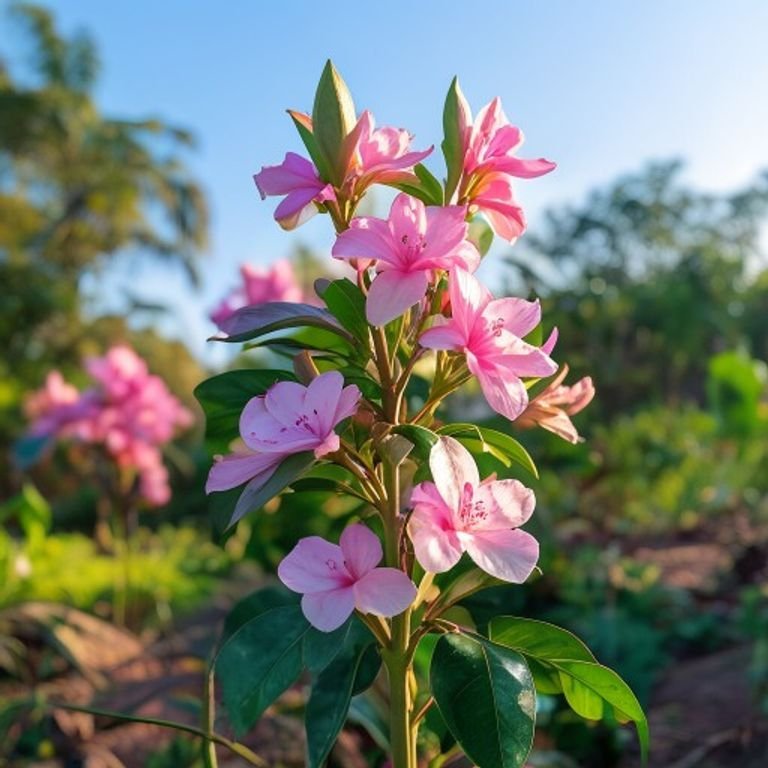
The most striking aspect of the Tabebuia is its appearance during its flowering season. When the tree is bare of leaves, its branches become completely covered in a profusion of delicate pink, trumpet-shaped flowers. This creates a stunning canopy of solid colour that is truly unforgettable. Before and after flowering, the tree has a more classic tree form, with attractive green foliage that provides shade and texture to the garden.
Flowers
The flowers are the main event. They are trumpet-shaped, vibrant pink, and often have a yellow throat. What makes them particularly special is their tendency to bloom en masse. The entire tree transforms into a spectacular pink cloud, typically from late winter to early spring (January to March in many parts of India). This mass flowering phenomenon lasts for several weeks, providing a glorious splash of colour when much of the garden is still awakening from the cooler months.
Foliage
After the spectacular floral display fades, the Tabebuia tree sprouts its palmate leaves. These leaves are typically compound, with several leaflets radiating from a central point, providing a lush green canopy through the spring and summer months. The foliage is relatively dense, offering good shade and a pleasant visual contrast to its earlier vibrant blooms.
Fragrance
While visually stunning, the flowers of the Tabebuia are not known for any significant fragrance. Their appeal lies entirely in their striking visual impact.
Decorative Value
The Tabebuia is an exceptional specimen tree. Its winter bloom makes it a focal point in any garden or landscape. It’s ideal for planting in large yards, parks, avenues, or as a street tree where its beauty can be admired by many. For winter gardens, it offers an unparalleled decorative value, breaking the monotony of dormant plants with its vibrant pink display. Its drought tolerance and low maintenance nature also add to its appeal for landscape designers and home gardeners alike.
Growing Requirements
Understanding the specific needs of your Tabebuia will ensure it thrives and rewards you with its magnificent blooms. While relatively low maintenance, meeting its basic requirements is crucial.
Light
The Tabebuia tree absolutely loves the sun. For it to produce its spectacular mass of flowers, it requires full sun exposure. This means at least 6-8 hours of direct sunlight per day. Choose a location in your garden that receives ample unobstructed sunlight throughout the day. In shaded areas, flowering will be sparse or non-existent.
Water
Once established, the Tabebuia is quite drought tolerant, making it an excellent choice for areas with less consistent rainfall or for gardeners who prefer low-water landscaping. However, young trees will need regular watering to help them establish a strong root system. For the first year or two after planting, water deeply once or twice a week, especially during dry spells. Reduce watering as the tree matures, allowing the soil to dry out completely between waterings. Overwatering can lead to root problems, so always ensure good drainage.
Temperature
This tree thrives in warm climates, which makes it well-suited for many regions across India. It prefers frost-free environments, though mature trees can tolerate very light, brief frosts once established. Prolonged or severe frost can damage young trees or even kill them. If you live in an area prone to occasional mild frosts, consider planting it in a sheltered spot or providing temporary protection for young trees during the coldest nights.
Humidity
The Tabebuia is generally adaptable to a range of humidity levels and doesn’t have specific high humidity requirements. It performs well in the relatively dry winter months, which often coincides with its flowering period in India.
Soil
Well-drained soil is paramount for the health of your Tabebuia. It can tolerate a variety of soil types, including sandy, loamy, or clay soils, as long as they drain well. Avoid heavy, compacted soils that retain too much moisture, as this can lead to root rot. A slightly acidic to neutral pH is generally preferred, but it’s quite forgiving.
Potting Mix
While primarily a large landscape tree, young Tabebuia plants can be grown in large pots for a few years before transplanting to the ground. For container growing, use a high-quality potting mix that offers excellent drainage. A mix formulated for trees or palms, often containing perlite or coarse sand, would be suitable. Ensure the pot has ample drainage holes.
Fertilizer
The Tabebuia is not a heavy feeder and generally requires minimal fertilization once established. For young trees, a balanced, slow-release granular fertilizer applied once in early spring can help promote healthy growth. For mature trees, fertilization is usually only necessary if the soil is poor or if the tree shows signs of nutrient deficiency (e.g., pale leaves, poor growth). Avoid over-fertilizing, especially with high-nitrogen fertilizers, as this can promote leafy growth at the expense of flowers.
How to Care for This Plant
Caring for your Tabebuia involves a few straightforward steps, ensuring it grows into a magnificent specimen tree.
- Choosing the Right Spot: Select a location in your garden that receives full sun for most of the day. Ensure there’s enough space for the tree to reach its mature height and spread without obstruction from buildings or power lines.
- Planting: When planting a young Tabebuia, dig a hole that is twice as wide as the root ball and just as deep. Gently remove the plant from its container, loosen any circling roots, and place it in the hole so that the top of the root ball is level with the surrounding ground. Backfill with soil, gently tamp down to remove air pockets, and water thoroughly.
- Initial Watering: For the first year, consistent watering is essential for establishing a strong root system. Water deeply 1-2 times a week, ensuring the soil gets thoroughly moistened. Reduce frequency once the tree is established.
- Pruning: Minimal pruning is needed for Tabebuia. The best time to prune is after it has finished flowering in spring, but before it puts on new growth. Focus on removing dead, damaged, or diseased branches. You can also lightly prune to shape the canopy or remove any crossing branches. Avoid heavy pruning, as this can reduce flowering.
- Pest and Disease Monitoring: While generally robust, keep an eye out for common tree pests. Regularly inspect the leaves and branches. Good cultural practices, such as proper watering and air circulation, go a long way in preventing most issues.
- Mulching: Apply a 2-4 inch layer of organic mulch (like wood chips or bark) around the base of the tree, keeping it a few inches away from the trunk. Mulching helps retain soil moisture, suppress weeds, and regulate soil temperature.
- Seasonal Care:
- Winter (Flowering Season): Enjoy the spectacular blooms! Ensure minimal watering unless the soil is exceptionally dry.
- Spring (Post-flowering): This is the ideal time for light pruning and, if needed, applying a balanced fertilizer as new leaves begin to emerge.
- Summer: Maintain a watchful eye on watering during prolonged dry spells, especially for younger trees.
- Monsoon: Ensure good drainage around the tree to prevent waterlogging during heavy rains.
Common Problems and Solutions
While the Tabebuia is generally a resilient tree, like all plants, it can encounter a few issues. Being aware of these and knowing how to address them will help ensure your tree remains healthy and beautiful.
- Yellow Leaves: This is often a sign of either overwatering or underwatering. Check the soil moisture. If it’s constantly soggy, you might be overwatering; if it’s bone dry for extended periods, it needs more water. Yellowing can also indicate a nutrient deficiency, though less common if the soil is reasonably good. Ensure good drainage.
- Pests: Tabebuia trees are not typically plagued by severe pest problems. However, occasional infestations of common tree pests like aphids, scale insects, or mealybugs can occur, especially on young or stressed trees. Inspect regularly and treat with neem oil or an appropriate organic insecticide if necessary.
- Fungal Diseases: Fungal issues are rare, particularly if the tree is in well-drained soil and has good air circulation. Root rot is the most common fungal problem, caused by consistently wet soil. Ensure proper drainage to prevent this.
- Root Rot: The primary cause of root rot is excessive moisture in the soil, often due to overwatering or poor drainage. Symptoms include wilting, yellowing leaves, and stunted growth. The best solution is prevention: plant in well-drained soil and water judiciously. Once severe, root rot can be difficult to reverse.
- Poor Flowering: If your Tabebuia isn’t blooming as expected, several factors could be at play. Common reasons include insufficient sunlight (it needs full sun!), the tree being too young (it takes a few years to establish and begin heavy flowering), or incorrect pruning (pruning too late in the season can remove flower buds). Ensure it gets maximum sun exposure.
- Slow Growth: As noted in its description, Tabebuia can be slow-growing initially. This is normal, especially in its first few years as it focuses on establishing a strong root system. Patience is key. Provide optimal growing conditions to encourage steady, healthy growth.
- Leaf Drop: The Tabebuia is a deciduous tree, meaning it naturally sheds its leaves before flowering in winter. This is a normal and expected part of its life cycle, preceding its spectacular bloom. If leaves drop at other times, it could indicate stress from extreme heat, drought, or overwatering.
- Frost Damage: Young Tabebuia trees are particularly susceptible to frost damage. In areas that experience occasional frost, cover young trees with a frost cloth or burlap on cold nights. Once mature, trees are more resilient but can still suffer damage during prolonged severe freezes.
Benefits
Beyond its stunning aesthetics, the Tabebuia offers several benefits that make it a valuable addition to Indian gardens and landscapes.
- Spectacular Winter Blooms: This is by far its most significant benefit. When many other trees are dormant, the Tabebuia bursts into a breathtaking display of pink flowers, providing unparalleled beauty during the cooler months. It’s a true beacon of colour.
- Drought Tolerant: Once established, the Tabebuia is remarkably drought tolerant, making it an excellent choice for water-wise landscaping. This reduces the need for frequent irrigation, saving both water and effort.
- Low Maintenance: With minimal pruning and fertilization requirements, the Tabebuia is a relatively low-maintenance tree. This makes it suitable for gardeners who appreciate beauty without excessive upkeep.
- Home Decoration & Landscaping: Its dramatic flowering makes it an ideal specimen tree, drawing the eye and becoming a focal point in large gardens, parks, and along avenues. It provides an excellent aesthetic for landscaping, adding structure and seasonal interest.
- Pollinator Friendly: While not its primary purpose, the trumpet-shaped flowers of the Tabebuia can attract various pollinators, including bees, especially during a time when other nectar sources might be scarce. This contributes to the local ecosystem’s health.
Frequently Asked Questions
When does the Tabebuia bloom?
The Tabebuia, or Pink Trumpet Tree, typically blooms in late winter to early spring. In many parts of India, this translates to a glorious display from January to March, when the tree’s bare branches become covered in a profusion of pink flowers.
Does the Tabebuia need a lot of water?
No, once established, the Tabebuia is highly drought tolerant and requires low watering. For young trees, consistent watering is important to establish roots, but mature trees prefer the soil to dry out between waterings and can withstand dry spells very well.
How tall does the Tabebuia grow?
In ideal growing conditions, the Tabebuia tree can reach an impressive height of 15 to 30 feet, forming a substantial and beautiful canopy. It’s important to consider this mature size when choosing a planting location.
Final Thoughts
The Tabebuia, or Pink Trumpet Tree, is more than just a plant; it’s a winter celebration, a living masterpiece that transforms the landscape with its incredible floral display. Its resilience, low maintenance needs, and stunning beauty make it an exceptional choice for Indian gardens, offering a splash of vibrant colour when it’s most needed.
Bringing a Tabebuia into your garden is an investment in beauty and natural grandeur. With the right care and a little patience, you’ll be rewarded with a spectacular show year after year, turning your garden into a winter wonderland. Plantrea is the online plant platform from Wynorg, helping plant lovers across India discover quality plants, practical growing advice, and trusted nursery sourcing. We hope this guide inspires you to embrace the elegance of the Tabebuia.
Interested in This Plant?
If the stunning beauty of the Tabebuia has captured your imagination, you might have a few more questions or perhaps want to know if this magnificent tree is the perfect fit for your specific garden space. Our Plant Expert chat is here to help you explore all the possibilities.
Feel free to reach out to our Plant Expert, available at the bottom-right corner of every page. They can assist you with various queries, such as checking whether the Tabebuia is currently available for purchase. You can also get personalised plant recommendations tailored to your home or garden conditions, ensuring you choose the best plants for your unique environment.
Our expert can also answer any lingering questions you might have about Tabebuia care and maintenance, or even help you discover suitable alternatives if the Tabebuia isn’t quite right for your space or if you’re looking for similar winter-flowering trees. Think of them as your friendly gardening assistant, ready to provide trusted advice and help you cultivate your green dreams.
Want to buy this plant? Visit https://plantrea.com/shop-2/