Champa Plant – Plumeria – Intensely Fragrant Temple Flower | Wynorg Nursery
There are few sights and scents as iconic in an Indian garden as the beautiful Champa tree. With its waxy, five-petaled flowers and intoxicatingly sweet fragrance, the Champa, often known as Plumeria, holds a special place in our hearts, our homes, and our spiritual traditions. From adorning hair to being offered in temples, these vibrant blossoms evoke feelings of peace and beauty. Its resilience and stunning display make it a beloved choice for gardens across the country.
As you embark on your journey with this magnificent plant, Plantrea is here to help. Plantrea is the online plant platform by Wynorg, a trusted Indian brand known for delivering healthy live plants safely across India. We believe every plant lover deserves the joy of a thriving garden, and with the right guidance, your Champa tree can flourish for years to come.
Botanical Overview
The Champa tree, scientifically known as Plumeria rubra, belongs to the Apocynaceae family, which also includes other well-known flowering plants like the Nerium (Oleander). Its origins trace back to tropical and subtropical regions of the Americas, but it has long since made itself at home in India, becoming an integral part of our horticultural landscape. This beautiful specimen is primarily a tree, though it can be maintained as a large shrub, growing upright with a somewhat spreading canopy. It is a deciduous plant, meaning it sheds its leaves seasonally, typically during the cooler, drier winter months, a natural characteristic that often surprises first-time growers.
Why People Love This Plant
The allure of the Champa tree, or frangipani as it’s often called in other parts of the world, is undeniable. Its charm lies in a combination of its visual appeal and its unforgettable scent.
Appearance
The overall appearance of the Champa tree is striking. It features stout, somewhat succulent branches that are often gnarled and picturesque, especially in mature specimens. The bark is typically smooth and greyish, contrasting beautifully with the lush green foliage during the growing season.
Flowers
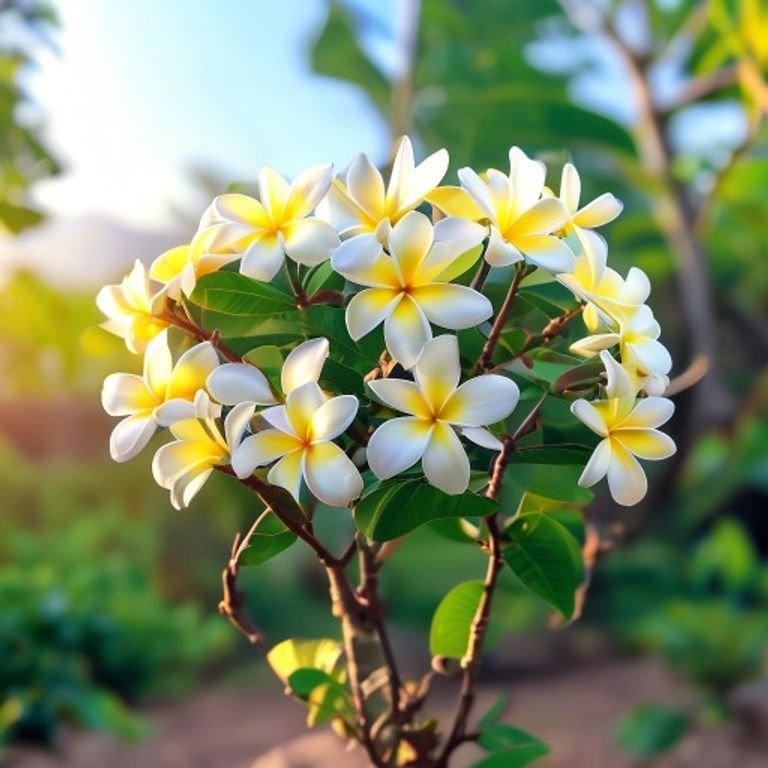
The flowers are undoubtedly the star of the show. Champa produces abundant clusters of waxy, five-petaled blooms at the tips of its branches from spring through fall. These flowers come in a glorious array of colours, most commonly shades of pink, yellow, and white, often with a vibrant yellow centre that fades outwards. Each flower is a perfect star shape, making them incredibly attractive and widely used in garlands, leis, and as offerings.
Foliage
The leaves of the Champa tree are large, dark green, and somewhat leathery, with prominent veins. They are arranged in spirals at the branch tips, creating a dense, tropical look during the warmer months. As a deciduous tree, it’s normal for the leaves to turn yellow and drop in late autumn or early winter, signaling a period of rest for the plant.
Fragrance
Perhaps the most celebrated feature of the Champa is its intensely sweet and exotic fragrance. This captivating scent is strongest in the evenings, filling the air with a delightful aroma that can drift quite far. This makes it an ideal plant to place near windows, patios, or garden seating areas where its perfume can be fully appreciated.
Decorative Value
Beyond its individual beauty, the Champa tree offers immense decorative value. Its sculptural form, vibrant flowers, and lush foliage make it a focal point in any garden. Whether planted as a specimen tree, incorporated into a mixed border, or grown in a large container, the frangipani brings a touch of tropical elegance and traditional charm to Indian homes and gardens.
Growing Requirements
To ensure your Champa tree thrives and blesses you with its beautiful blooms, understanding its basic growing requirements is key.
Light
The Champa tree is a true sun worshipper. It requires full sun exposure, ideally at least 6-8 hours of direct sunlight per day, to flower profusely. In Indian conditions, choose a spot where it receives morning sun and ample light throughout the day. Too little light is the most common reason for a Champa not blooming.
Water
Once established, Plumeria rubra is remarkably drought-tolerant, a significant advantage in many parts of India. During the active growing and flowering season (spring to fall), water deeply when the top few inches of soil feel dry. Allow the soil to dry out between waterings to prevent root rot. During its dormant winter period, when leaves have dropped, significantly reduce watering, or stop it altogether if it’s planted in the ground, only resuming when new growth appears in spring.
Temperature
Champa trees thrive in warm, tropical, and subtropical climates. They prefer temperatures between 18°C and 30°C. While they can tolerate brief drops, prolonged exposure to temperatures below 10°C can be damaging. In regions with mild winters, they can stay outdoors year-round. In areas prone to frost, container-grown plants should be moved indoors to a protected, bright location, or in-ground plants offered protection.
Humidity
Being a tropical plant, Plumeria appreciates moderate to high humidity but is quite adaptable. The ambient humidity in most parts of India during the monsoon and warmer months is generally sufficient.
Soil
Well-drained soil is paramount for the Champa tree. It prefers a slightly acidic to neutral soil pH (6.0 to 7.0). Heavy clay soils that retain too much moisture are detrimental. Amend such soils with organic matter and sand to improve drainage.
Potting Mix
If growing your Champa in a pot, a good quality, well-draining potting mix formulated for cacti and succulents, or a general-purpose mix amended with perlite and coarse sand, is ideal. Ensure the pot has ample drainage holes.
Fertilizer
Feed your Champa tree during its active growing season (spring and summer) with a balanced fertilizer, or one slightly higher in phosphorus to encourage flowering. A slow-release granular fertilizer applied once or twice a season, or a liquid feed every 2-4 weeks, can be beneficial. Avoid fertilizing during its dormant winter period.
How to Care for This Plant
Caring for your Champa tree is a rewarding experience, leading to seasons of beautiful, fragrant blooms. Here’s a practical guide:
- Watering Schedule: During summer, water thoroughly when the top 2-3 inches of soil are dry. Reduce frequency significantly in autumn, and almost cease in winter when dormant. Overwatering is a common killer.
- Pruning: Prune your Plumeria in late winter or early spring before new growth emerges. Pruning encourages branching, which leads to more flowers, as flowers form at the tips of new growth. Remove dead, damaged, or crossing branches. You can also shape the tree to your desired form. Be aware that pruning cuts will ooze a milky white sap, which can be an irritant, so wear gloves.
- Propagation: Champa trees are easily propagated from stem cuttings. Take a cutting (1-2 feet long) from a healthy branch in late spring or early summer. Allow the cutting to callus over for a few days (or even a week) in a dry, shaded place before planting it in well-draining soil. Keep the soil slightly moist until roots establish.
- Pest and Disease Monitoring: Regularly inspect your Champa tree for signs of pests or diseases, especially during the active growing season. Early detection makes treatment easier.
- Winter Care: As mentioned, Champa is deciduous. Don’t be alarmed if leaves yellow and drop in winter; this is normal. Reduce watering dramatically. In colder regions, protect potted plants by moving them indoors or providing frost cover for in-ground trees.
- Repotting: For container-grown Champa, repot every 2-3 years into a slightly larger pot with fresh potting mix. This is best done in early spring.
Common Problems and Solutions
While generally hardy, Champa trees can encounter a few issues. Here are some common problems and their solutions:
- Yellow Leaves: This can be caused by several factors.
- Overwatering: Most common cause. Ensure good drainage and let soil dry between waterings.
- Nutrient Deficiency: Especially nitrogen. Apply a balanced fertilizer during the growing season.
- Normal Dormancy: If it’s late autumn or winter, yellowing and leaf drop are natural for deciduous Champa.
- Rust Fungus: Appears as orange, powdery spots on the undersides of leaves.
- Solution: Remove affected leaves immediately. Improve air circulation around the plant. Apply a suitable fungicide.
- Mealybugs: Small, white, cottony pests often found in leaf axils and on stems.
- Solution: Wipe off with a cotton swab dipped in rubbing alcohol for minor infestations. For larger problems, use neem oil spray or an insecticidal soap.
- Root Rot: Caused by excessive watering and poor drainage. Symptoms include wilting, yellowing leaves, and a soft stem base.
- Solution: This is often fatal once advanced. Prevent by ensuring excellent drainage and never overwatering. If caught early, repot into fresh, dry soil after trimming any mushy roots.
- Poor Flowering / No Blooms:
- Solution: The most common reason is insufficient sunlight. Ensure your Champa tree receives at least 6-8 hours of direct sun daily. Also, ensure it has a dry winter rest period and is receiving adequate phosphorus in its fertilizer.
- Leaf Drop (other than winter):
- Solution: Can indicate stress from over/under watering, sudden temperature changes, or nutrient deficiency. Assess care routine.
Benefits
Beyond its sheer beauty, the Champa tree offers several wonderful benefits for Indian homes and gardens.
- Home Decoration: The vibrant and fragrant flowers are perfect for home decoration, often floated in bowls of water or used in traditional floral arrangements, bringing a touch of nature’s elegance indoors.
- Balcony Gardening: While it can grow into a large tree, a Champa tree can be successfully grown in large pots on balconies, provided it gets ample sunlight. Its fragrant blooms will transform your outdoor space.
- Landscaping: As a specimen tree or part of a mixed tropical landscape, the Plumeria rubra adds dramatic flair, height, and colour. Its drought tolerance makes it a good choice for xeriscaping in suitable climates.
- Pollinator Friendly: The beautiful flowers of the Champa tree attract various pollinators, especially butterflies, adding life and movement to your garden ecosystem.
- Temple Offerings: In India, Champa flowers hold significant cultural and religious importance. They are widely used in temple offerings, prayers, and garlands, symbolizing devotion and purity.
Frequently Asked Questions
How to get more flowers?
To encourage abundant flowering, ensure your Champa tree receives full sun for at least 6-8 hours daily. A dry winter rest period, where watering is significantly reduced or stopped, is also crucial for initiating a good bloom cycle. Fertilize with a phosphorus-rich fertilizer during the growing season.
Why are leaves falling in winter?
Leaf fall in winter is completely normal for the Champa tree. It is a deciduous plant and naturally sheds its leaves during its dormant period in cooler, drier months. Don’t worry, new leaves will emerge with the onset of spring.
Is fragrance stronger at night?
Yes, the intense, sweet fragrance of Champa flowers is particularly stronger in the evenings and through the night. This is a common characteristic of many night-pollinated flowers, designed to attract moths and other nocturnal pollinators.
Final Thoughts
Bringing a Champa tree into your garden is an invitation to experience tropical beauty and an intoxicating fragrance that truly embodies the spirit of Indian gardens. With its stunning flowers and relatively easy care once established, this beautiful tree will reward you with years of visual and aromatic pleasure. Embrace its seasonal changes, provide it with plenty of sun and well-draining soil, and watch it flourish.
Remember, gardening is a journey of learning and joy. Plantrea is the online plant platform from Wynorg, helping plant lovers across India discover quality plants, practical growing advice, and trusted nursery sourcing. We are committed to supporting your gardening passion every step of the way.
Interested in This Plant?
The Champa tree is truly a garden gem, cherished for its beauty and incredible fragrance. If you’re considering adding this delightful plant to your home or garden, you might have a few questions before making a decision. That’s where our Plant Expert chat comes in handy!
Located at the bottom-right corner of every page, our Plant Expert is an experienced gardening assistant ready to help. You can use the chat to quickly check whether the Champa tree is currently available in stock. Our expert can also provide personalized plant recommendations tailored to your specific climate, space, and gardening experience, ensuring you find the perfect match.
Beyond availability and recommendations, feel free to ask any lingering questions you have about the Champa tree’s care and maintenance. Whether it’s about winter protection, pruning techniques, or dealing with a specific pest, our expert is there to offer practical, trustworthy advice. And if, by chance, the Champa isn’t quite right for your space, or if you’re looking for something similar, our expert can help you discover suitable alternatives that will thrive in your environment.
Want to buy this plant? Visit https://plantrea.com/shop-2/